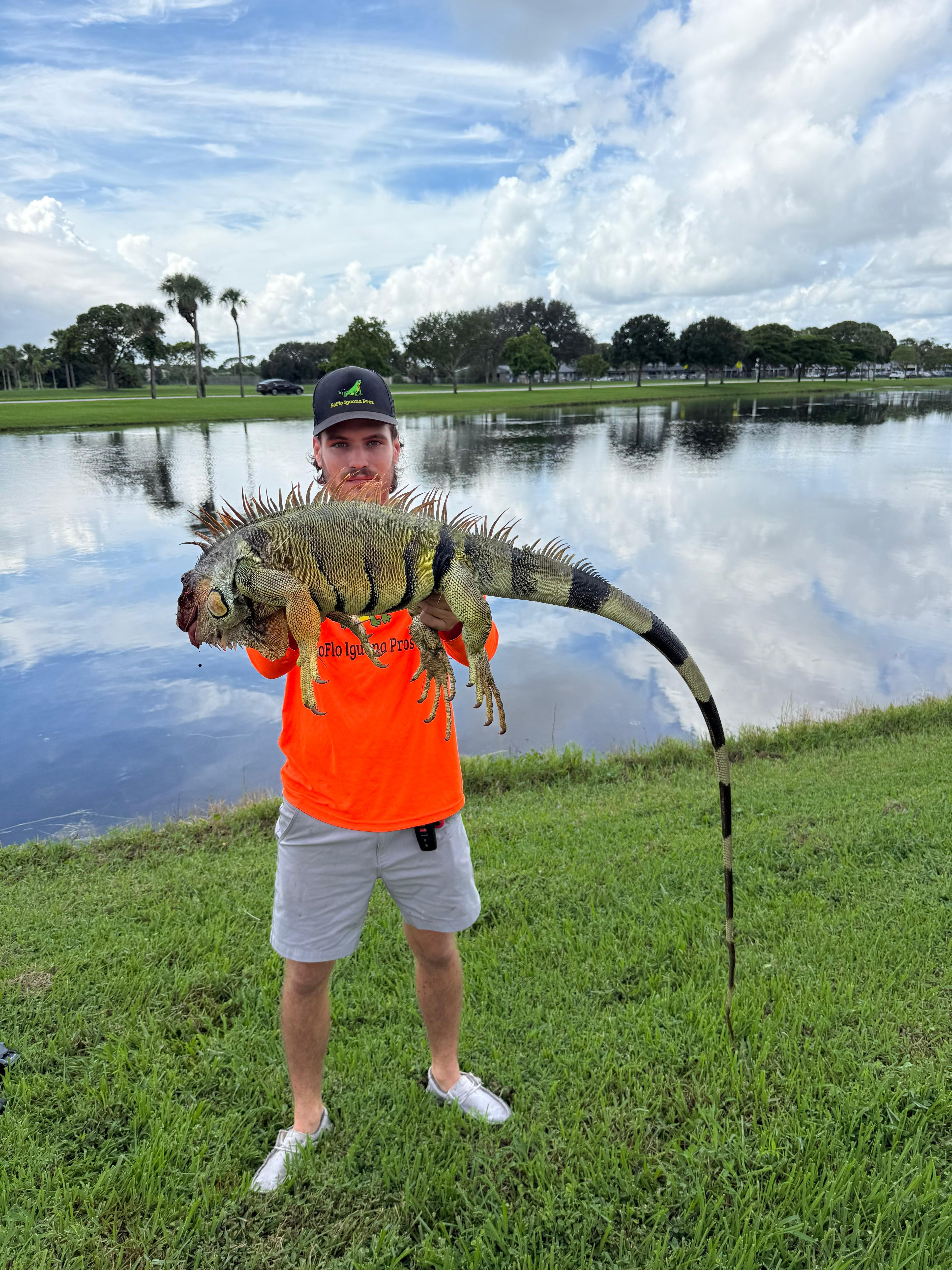

The rule is simple: put the trap where the iguana already is, not where you want it to be. On a Palm Beach County waterfront lot, that's the seawall cap where they bask, the base of a dock piling, the mouth of a burrow dug into the bank, and the worn path between the water and whatever they're eating.
Sun matters too. Iguanas favor spots that warm up early, so a trap on an east-facing seawall or a sun-baked deck edge gets more traffic than one in the shade. I also watch for their droppings — a surface covered in them is a surface they use constantly, and that's where a trap belongs.
The spots that reliably produce
If I had to rank the high-percentage locations on a typical canal-front lot, it's these:
- The seawall cap, especially the sunniest morning stretch
- The base of a dock piling or ladder where they haul out
- Right at a burrow mouth on the bank or against the foundation
- The worn dirt path between the water and a fruit tree or flower bed
- A deck or patio edge coated in droppings
Reading the sign
You don't have to see an iguana to know where to set. Follow the droppings and the wear — basking spots and travel lines get coated and beaten down over time. A surface plastered with droppings is one they use every day, and a trap there sits right in the flow of traffic.
Places that waste a trap
Open lawn, deep shade, and tucked-away corners waste a trap — iguanas simply don't go there. So does moving it every day out of impatience; iguanas need a beat to get comfortable passing a new object on their route. Set it right, leave it put, and let the animal's own habit do the work.
Common questions
How do I know where iguanas travel?
Follow the droppings and the wear — basking spots and routes get coated and beaten down. Those surfaces tell you exactly where to set, even when the animals have dived into the canal at your approach.
Should I hide the trap?
Blending it into the surroundings helps a little, but placement on the actual route matters far more than concealment. A well-placed visible trap beats a cleverly hidden one that's off the path.
Can I set a trap right at a burrow?
Yes — a burrow mouth is one of the best spots there is, because the animal has to pass it coming and going. Just be sure it's an active burrow; fresh tracks and droppings at the opening tell you it's in use.