
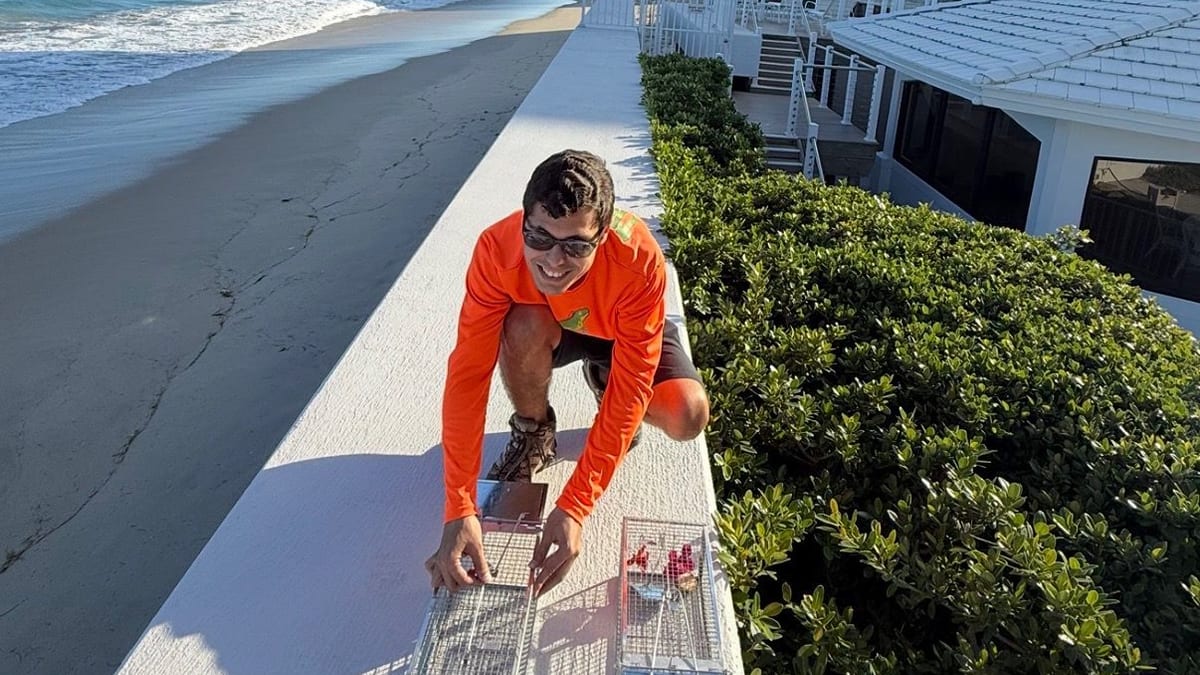
Iguana trapping that works the property, not just the visit
For waterfront lots and community lakes where new iguanas move in as fast as you remove them, a monitored trap line is the fix. Traps set on the exact runs they use, checked on a schedule and moved as they adapt — so the numbers drop week over week. From $99/mo, no lock-in.
Monitored
checked on a schedule
$99/mo+
programs, no lock-in
5.0
123+ Google reviews
Licensed
insured · FWC-compliant
Some properties can't be fixed in a single visit.
On a small yard with one burrow, a one-time removal is the right, cheaper call — and we'll tell you so. But a lot of Palm Beach County properties aren't that. On an Intracoastal seawall, a finger canal, or a community lake with a quarter-mile of bank, the iguanas you take out this morning are replaced from the water and the neighbor's bank by next week. Removal alone becomes a monthly bill that never ends.
Trapping is what actually breaks that. A monitored line sits on the routes the animals use and works around the clock — catching the ones that were submerged or denned during a single visit, and steadily driving the resident population down instead of just skimming the surface. Done right, with the traps checked and moved, it's the most effective tool there is for a heavy waterfront problem.
Placement is the whole game.
Iguanas are creatures of habit — same routes, same basking rocks, same banks. We set the line to those four patterns, not to guesswork, which is why our traps catch and a yard full of random cages doesn't.
Seawall caps & dock lines
The highways. Iguanas run the same cap and piling routes every day, which makes the waterfront edge the single highest-catch placement on the property.
Canal & retention-lake banks
Long stretches of soft bank are where community populations concentrate — and where a scaled trap line earns its keep instead of a lone cage in the yard.
Basking decks & rip-rap
Morning warm-up spots they return to like clockwork. Predictable enough to set a trap on and catch the same repeat offenders day after day.
Burrow mouths & foundation runs
The dens and the paths to them. Trapping here takes the breeding females you never see basking out in the open.
Monitored, moved, and measured.
A trap program isn't "set it and forget it." It's a managed line that we read, clear, and adjust so the catch rate stays high from the first week to the last.
- 1
Map the runs
The first walk charts the seawall caps, dock lines, canal banks, and basking spots your iguanas actually use. The trap line is only as good as that map.
- 2
Set the trap line
Live traps go on the active routes and warm-up spots, sized and spaced to the property. Placement does the work — a trap in the wrong spot catches nothing.
- 3
Monitor & clear
We check the line on a set schedule and clear catches promptly and humanely. We never leave a trap sitting — that's the law, and it's what keeps it working.
- 4
Move & adjust
As the easy catches thin out and behavior shifts, we relocate traps to the new hot spots so the catch rate stays high instead of stalling out.
- 5
Report & prevent
You get a running record of what's caught, and we harden the property alongside it — wraps and burrow collapse — so fewer new iguanas replace the ones we pull.
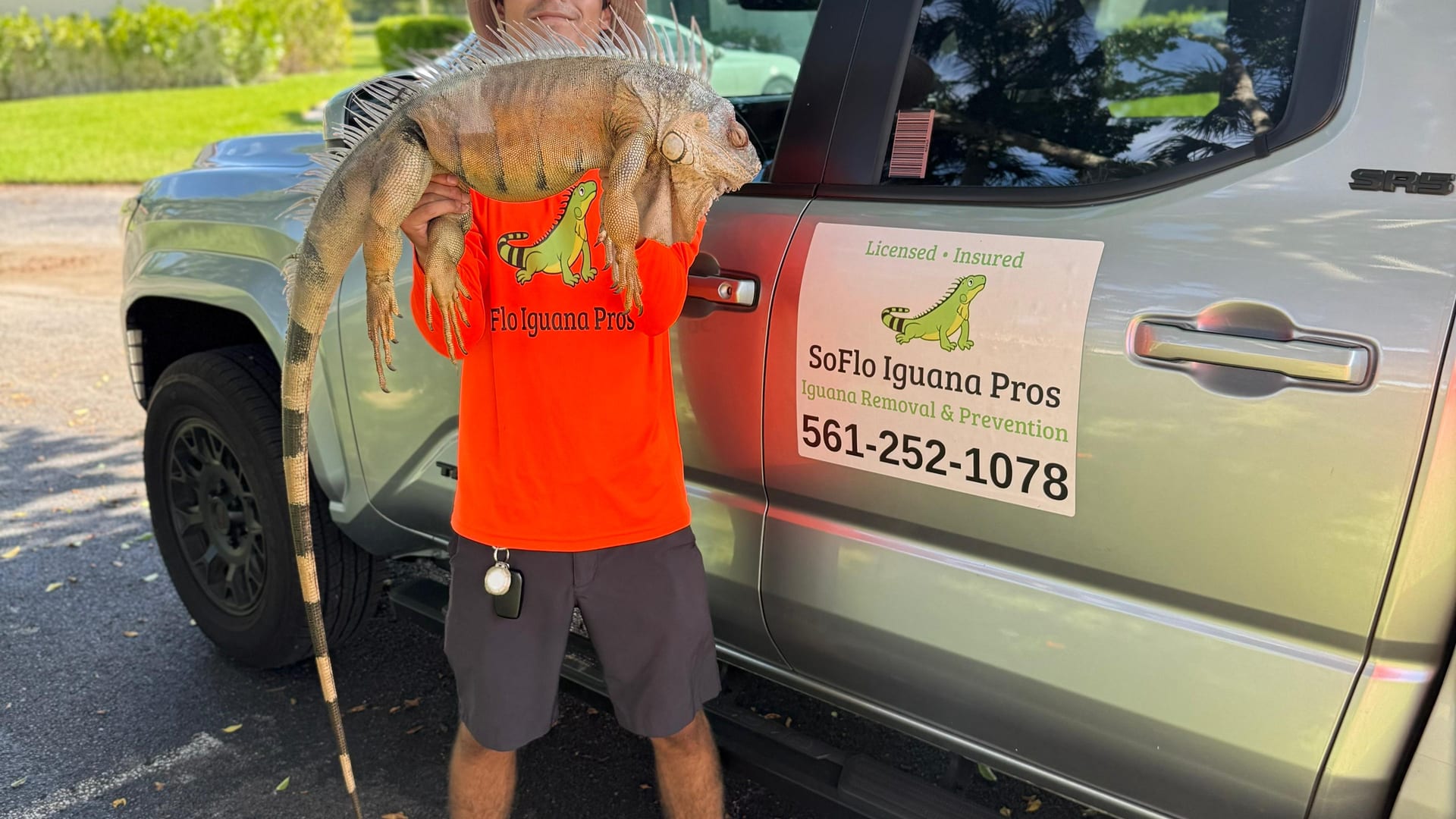
A trap you don't monitor is just a cage.
The difference between a program that works and one that doesn't is attention. We check the line on a set schedule, clear every catch promptly and humanely, and keep the whole thing inside FWC guidelines — no poisons, no traps left to bake in the sun, no guesswork.
- Scheduled checks — traps are never left sitting unattended
- Licensed, insured technicians handling every catch
- A running catch log a board or property manager can file
More traps isn't the answer. The right traps are.
We get called to rescue plenty of DIY and cut-rate trap jobs. Almost always it's one of these four mistakes — and none of them are fixed by simply buying more cages.
Traps scattered around the yard
Iguanas don't wander randomly — they run set routes. A dozen traps off those routes catch less than two traps sitting on them.
Wrong bait, or none at all
Green iguanas are picky, seasonal feeders. Generic bait, or a bare trap, gets ignored while the animal walks right past it.
Traps left sitting for days
An unattended trap is both inhumane and illegal, and a stressed catch teaches the rest of the population to avoid the area. Monitoring is the point.
One-and-done thinking
Trapping is a curve, not a single visit. Stop after week one and the property refills from the bank next door within the month.
What a program actually looks like.
It front-loads on purpose. The first month does the heavy lifting; after that it's lighter upkeep, and prevention runs the whole way through to make the upkeep cheaper.
Knockdown
The heavy catching. Established resident iguanas come out fastest while the trap line is fresh on their daily routes.
Maintenance
Lighter, scheduled visits hold the line against the new ones drifting in off neighboring banks, canals, and preserves.
Prevention
Wraps, piling guards, and burrow collapse shrink what the property can hold, so maintenance gets easier — and cheaper — over the season.
Programs from $99/mo, no lock-in.
A monitored trapping program starts at $99/mo and is priced to the property — a single waterfront lot is a different number than a mile of HOA lake bank, and we won't pretend otherwise. The assessment and the written quote are free, and there's no lock-in contract: the program runs month to month for exactly as long as it's earning its keep.
What a program includes
- A mapped trap line set to your property's actual runs and basking spots.
- Scheduled visits to check and clear every trap, humanely and on time.
- Relocation as the catch shifts, so the line keeps producing instead of stalling.
- A running catch record — the documentation an HOA board or manager can file.
What sets the price
Mostly the length of waterfront and bank we're covering, how heavy the starting population is, and how often the line needs checking to stay ahead of it. A compact residential canal lot lands near the bottom of the range; a golf course or a gated community with lakes on every hole is scoped and priced to the acreage. Either way you see the number before we set a trap.
Homes, HOAs & golf courses
We run programs for waterfront homeowners, condo and HOA common areas, and golf courses across Palm Beach County — from a single canal in Boca Raton to community lakes in Wellington. Trapping brings the population down; prevention keeps it there, and most programs pair the two.
Trap programs across Palm Beach County.
We run monitored lines on the coast's Intracoastal seawalls, the inland finger canals, and the community lakes out west. Based in Lake Worth, so scheduled checks stay on schedule. Pick your city for the local read.
Trap lines at work.
Monitored programs from around Palm Beach County — seawalls, canal banks, and community lakes, with the prevention that keeps the numbers down.
Tap any photo to enlarge
Programs that hold up.
Iguana trapping questions.
Heavy waterfront problem?
Call or text Nick — he'll walk the bank and tell you whether it's a visit or a program.
Call (561) 735-1975How is a trapping program different from a one-time removal?
A one-time removal clears what's visible on the day we're there. A trapping program works the property over time — traps sit on the runs and basking spots iguanas keep using, so you also catch the ones that were in the water or the burrow during the first visit, and you keep new arrivals from re-establishing. On heavy waterfront and community properties, that's the only thing that actually holds.
Where do you place the traps?
On the exact routes and warm-up spots we map on the first walk — seawall caps, dock pilings, canal and lake banks, rip-rap, and burrow runs. Placement is the whole game. A well-placed trap outcatches a dozen scattered around a yard, so we set to the map, not to guesswork.
How often do you check the traps?
On a set schedule agreed up front, and we relocate traps as behavior changes. We never leave traps sitting unattended — that's neither humane nor legal, and a stressed catch actually teaches the rest of the population to avoid the spot.
Is iguana trapping humane and legal in Florida?
Yes. Green iguanas are an invasive species in Florida, and we trap and handle them under FWC guidelines by licensed, insured technicians — no poisons and no traps left to sit. You don't need a permit to have them removed from your own property.
How much does an iguana trapping program cost?
Monitored programs start at $99/mo, scaled to the property — a single waterfront lot costs far less than a mile of HOA lake bank. There's no lock-in contract; you can cancel any time, and the assessment and quote are free and in writing before we set a single trap.
How long until I see the numbers drop, and do I need a long contract?
Most properties see a clear drop in the first few weeks — that's the knockdown phase, when the resident iguanas come out fastest. After that it's lighter maintenance to hold the line. No long contract required; the program runs month to month for exactly as long as it's earning its keep.