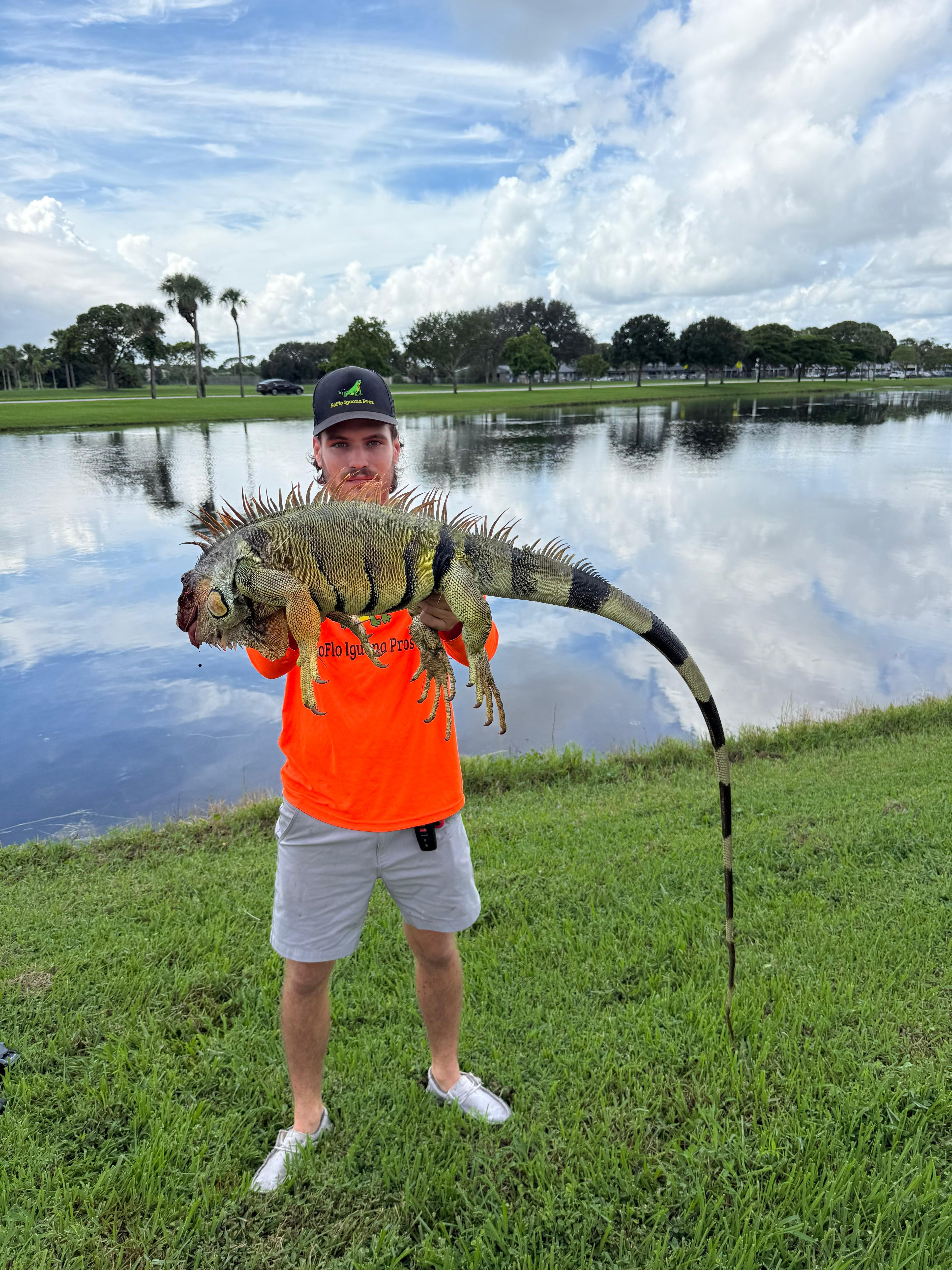

Trapping isn't about scattering cages and hoping. It works because iguanas are creatures of habit — they bask in the same spots and travel the same lines every day. I set live-catch traps directly on those routes: the seawall cap, the base of a dock piling, the mouth of a burrow, the worn path between a fruit tree and the water. An iguana that walks that line every morning will walk into a trap sitting on it.
The traps run between visits, which is the whole point. A property owner isn't home watching a canal all day, and neither am I. A well-placed trap line works the routes on its own schedule and catches the animals that were underwater or out of sight when I did my walk-through.
Why routes beat guesswork
The single biggest factor in whether a trap catches is where it sits. Iguanas won't cross an open lawn to investigate a cage in the middle of it — they hug the edges, the water line, and the warm surfaces. Reading those routes off the droppings and worn dirt is what separates a trap that fills up from one that sits empty next to a colony.
Sun plays into it too. Iguanas favor spots that heat up early, so an east-facing seawall cap or a sun-baked deck edge draws more traffic than a shaded corner. I set to the warmth and the wear, not to what's convenient to reach.
Checking, resetting, and moving
Traps have to be monitored so nothing sits in one longer than it should — that's both humane and, under Florida's anti-cruelty rules, required. On a program I check and reset on a set cadence, move traps as the animals shift routes, and pull them once the pressure drops off.
- Checked on a set visit schedule so no animal is left stressed
- Rebaited and reset each visit to keep them working
- Relocated when the iguanas change their travel lines
- Non-target animals released on the spot, unharmed
Common questions
How long does a trap stay set?
Only as long as it can be checked responsibly — traps aren't left unmonitored to bake in the sun. On a program I run them on a set visit cadence and reset or relocate them each time I'm there.
Do traps catch other animals?
Occasionally something else wanders in — a possum, a raccoon, the neighbor's cat — which is one more reason traps get checked regularly. Anything non-target gets released on the spot unharmed.
Why didn't my own trap catch anything?
Almost always placement. A cage set where it's convenient for you rather than on the iguana's actual route will sit empty for weeks. Move it onto the seawall cap, a piling base, or a burrow mouth and it usually changes overnight.