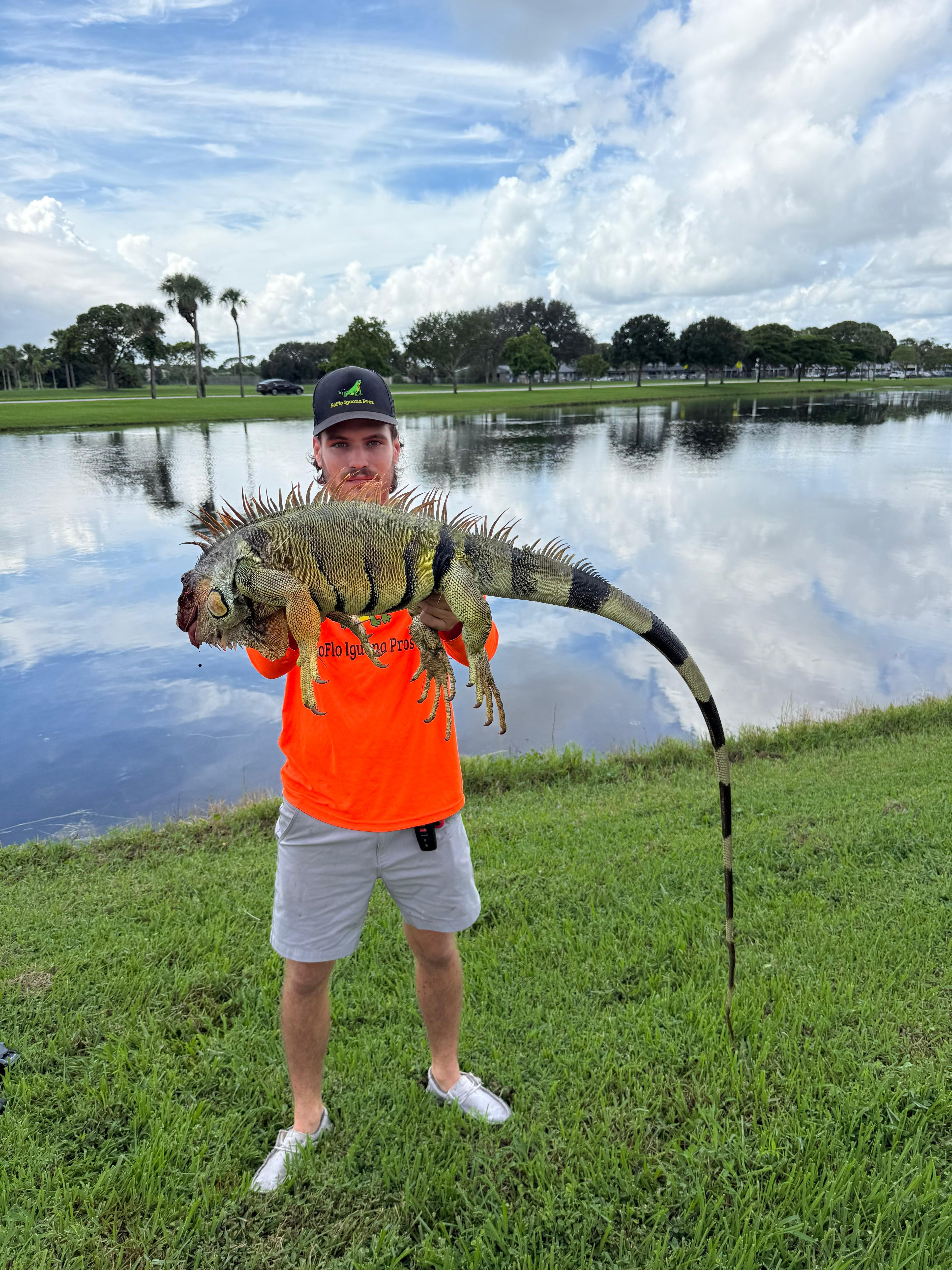

Traps work, but placement is everything. The mistake I see with store-bought cages is that people set them where it's convenient for the person, not where the iguana goes. An iguana won't detour across an open lawn to investigate a cage — it moves along the seawall, the dock, the bank, and its burrow, and the trap has to be on that line.
Done right, trapping is one of the most effective tools I have on waterfront properties, precisely because it keeps working between my visits. Done wrong, a trap can sit empty for weeks next to a colony. The gap between those two outcomes is reading the property correctly.
What makes a trap catch
A trap that fills up almost always has the same things going for it. None of them are exotic — they're just about respecting how the animal moves:
- Sits directly on a basking spot or travel route, read off droppings and wear
- On a warm, early-sun surface like an east-facing seawall cap
- Baited with something bright and sweet to pull the last few feet
- Left in place long enough for the iguana to get comfortable passing it
- Checked and reset regularly so it stays working and humane
Where store-bought trapping goes wrong
Most of the 'my trap doesn't work' calls I get come down to one of three things: the cage is in the wrong place, it's been moved every day out of impatience so no iguana ever settles into passing it, or it's never checked and has quietly become useless. Fix the placement and the patience and a basic live-catch cage catches iguanas just fine.
Common questions
Why isn't my store-bought trap catching anything?
Almost always it's placement — the trap is somewhere the iguanas don't travel. Moving it onto the seawall cap, a piling base, or a burrow mouth, then leaving it put for a few days, usually changes everything.
Are traps better than catching by hand?
They're not better, they're different — traps cover the property when nobody's watching, while hand-capture handles the animal you can see right now. Most jobs use both, matched to what each spot needs.
Do I need special bait for the trap to work?
Bait helps finish the job, but placement does the heavy lifting. A ripe, fragrant fruit like mango on a well-placed trap is plenty; the fanciest bait in the wrong spot still catches nothing.