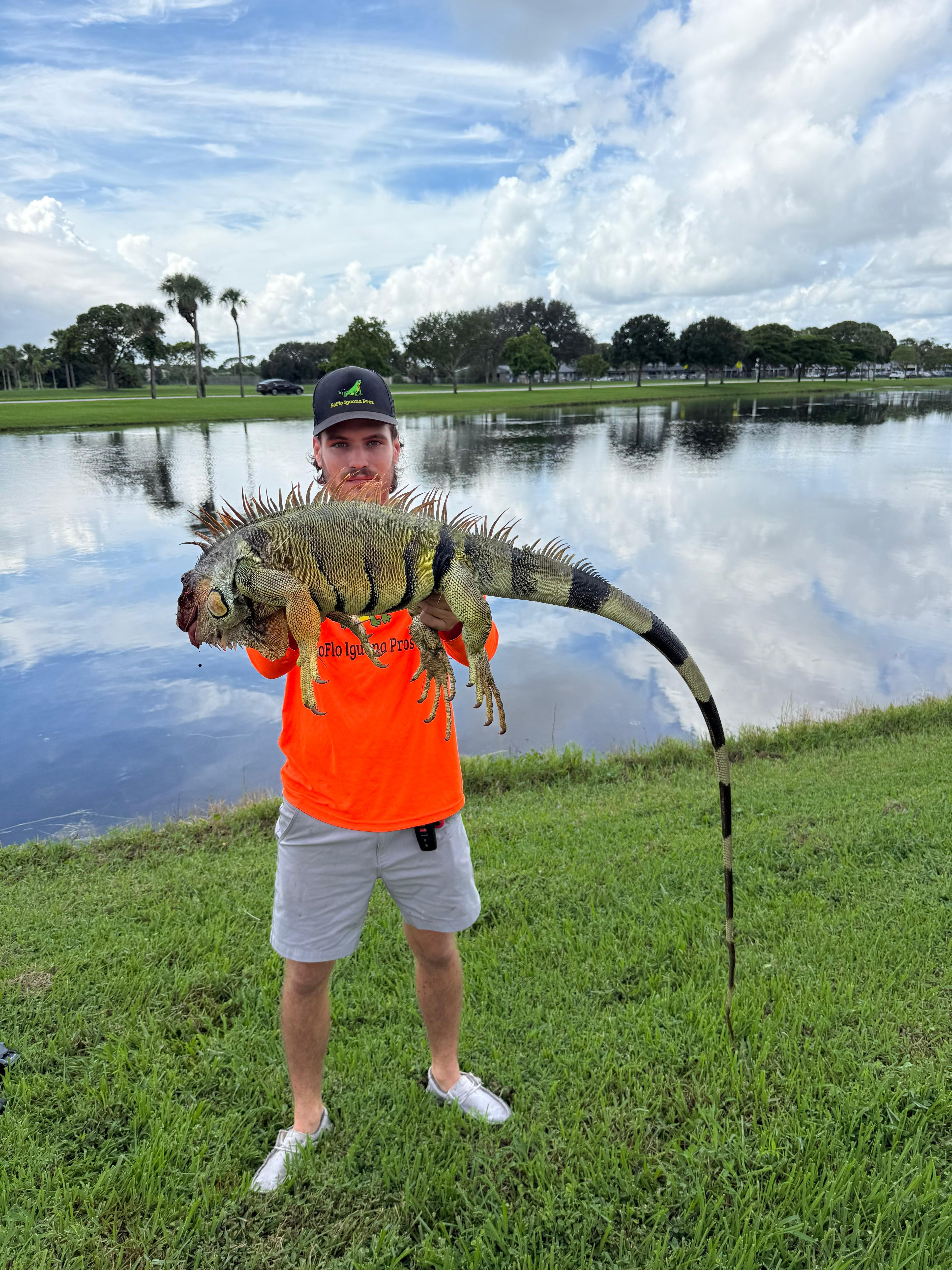
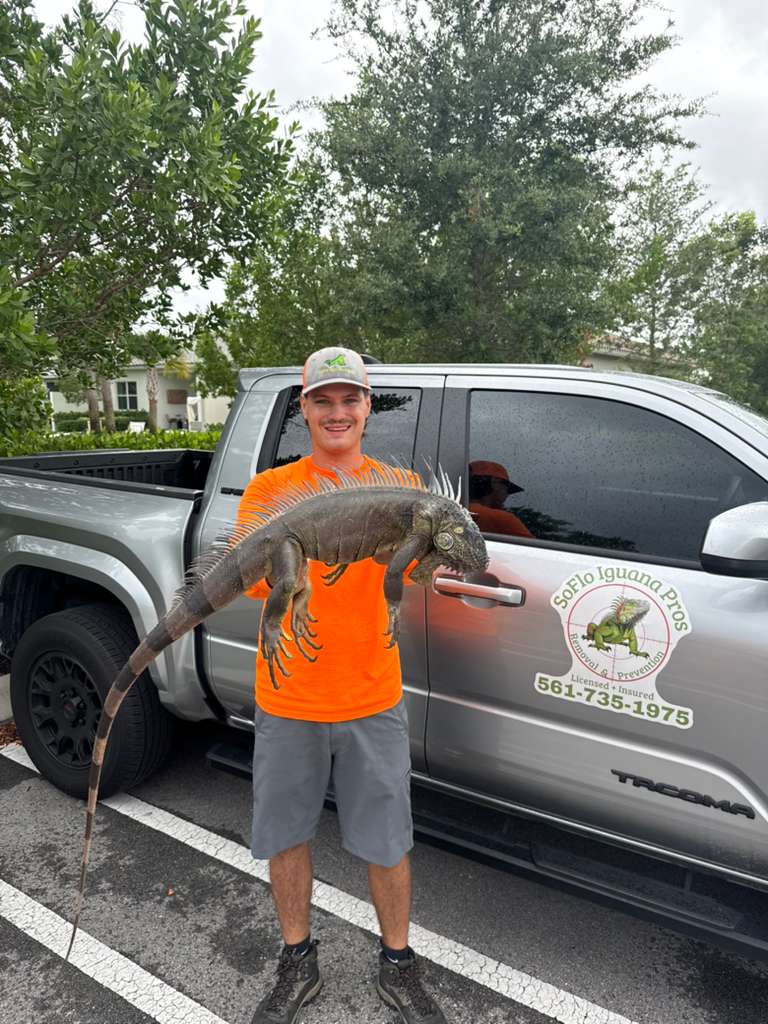
The green iguana (Iguana iguana) is a big, plant-eating lizard originally from Central and South America and parts of the Caribbean. In its native range it lives high in the tree canopy near rivers and lagoons, basking in the sun and dropping into the water when a hawk or a person gets too close. Almost everything about the animal — the strong claws, the flattened tail, the ability to hold its breath — is built for a life spent between trees and water.
It reached South Florida the way most of our invasive reptiles did: through the pet trade, escaped or released animals, and hitchhikers in cargo and landscaping stock. The warm, wet, waterfront environment of Palm Beach County turned out to be close to a perfect match for where the species already thrives back home. Once a few animals settled along a canal, the rest was just time and eggs.
What they actually look like
Despite the name, adults aren't always green. Hatchlings and young iguanas are usually bright green, but older animals shade toward grey-green, brown, and even bright orange — especially large males in breeding season, when the head and forelegs can flush a rusty color. That color range confuses a lot of Palm Beach County homeowners into thinking they have two different animals on the seawall when it's really an adult and a juvenile of the same species.
- A row of raised spines running down the back and tail
- A large round scale (the subtympanic plate) on the cheek below the ear
- A heavy dewlap, or throat flap, that males fan during displays
- A long, banded, whip-like tail that often makes up more than half the total length
Why they thrive here
South Florida gives iguanas year-round warmth, miles of seawall and canal bank to den in, and a buffet of ornamental plants. With no real predators and nowhere that stays cold long enough to matter most winters, populations have become firmly established across the county — from the barrier-island neighborhoods along the Intracoastal to inland communities built around retention lakes.
For a property owner, the color and the natural history matter less than the behavior. Iguanas bask by day, burrow into soft banks, and graze their way through landscaping. Understanding that pattern is the whole basis for getting them off a property and keeping them off. Nick and the SoFlo crew read a yard the way the iguana does — sun, water, food, cover — and work backward from there.
Common questions
Are green iguanas the same as the iguanas people keep as pets?
Yes — they're the same species, Iguana iguana. The ones loose in South Florida descend from released or escaped pets plus decades of breeding in the wild, and they're now an established invasive population rather than anyone's runaway pet.
Do green iguanas bite?
They can, and a big one has a serious bite along with claws and a heavy tail. A relaxed iguana basking on a dock mostly wants to be left alone, but a cornered or grabbed animal defends itself hard, which is one reason removal is best left to someone who handles them regularly.
How can I tell a green iguana from a native lizard?
Size and the spiny crest are the giveaways. Florida's native lizards are small; a green iguana is a foot or more of body plus a long banded tail, with a ridge of spines down the back and a round scale on the cheek. If it's basking on your seawall and it's the size of a house cat, it's a green iguana.