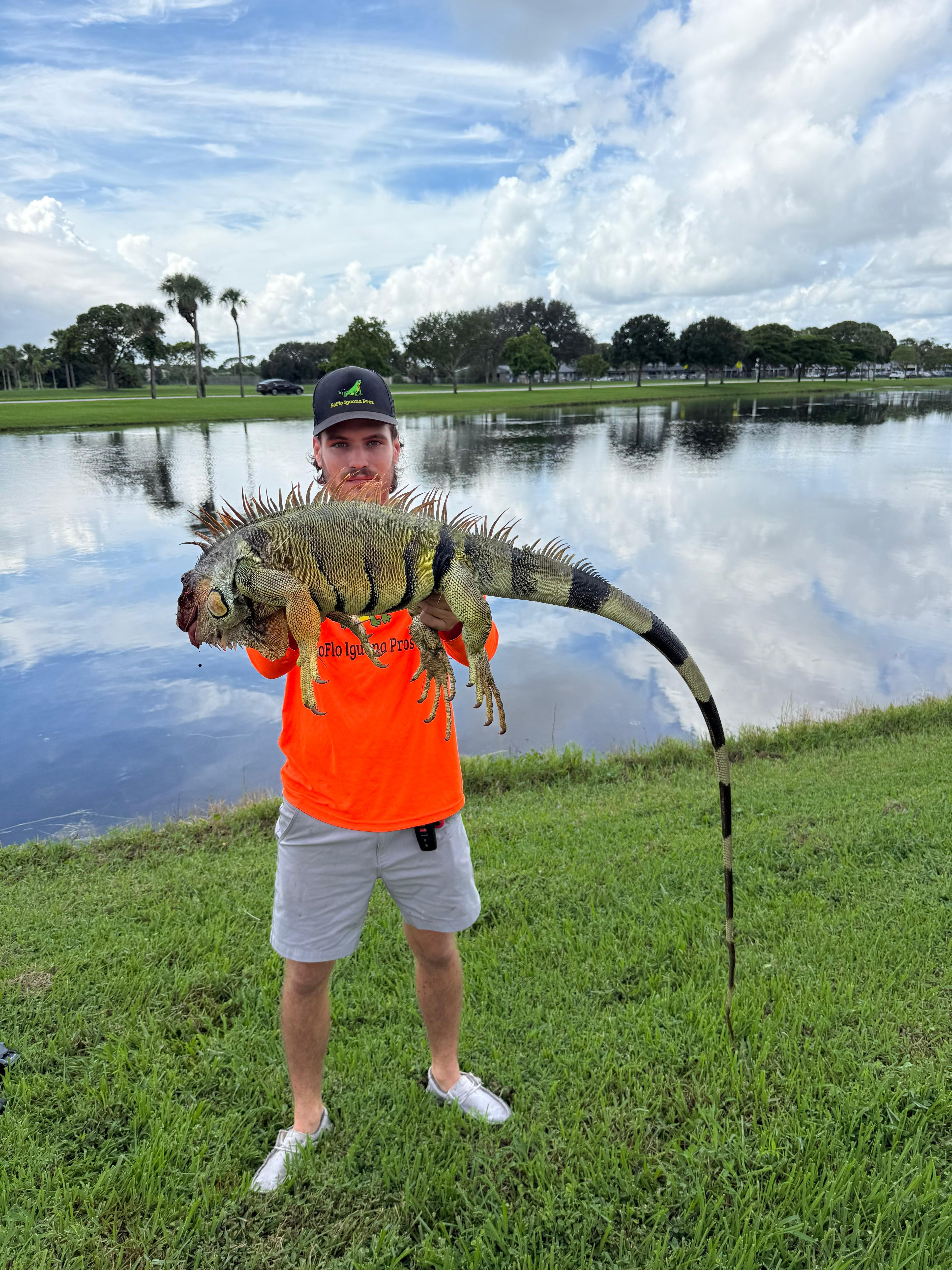
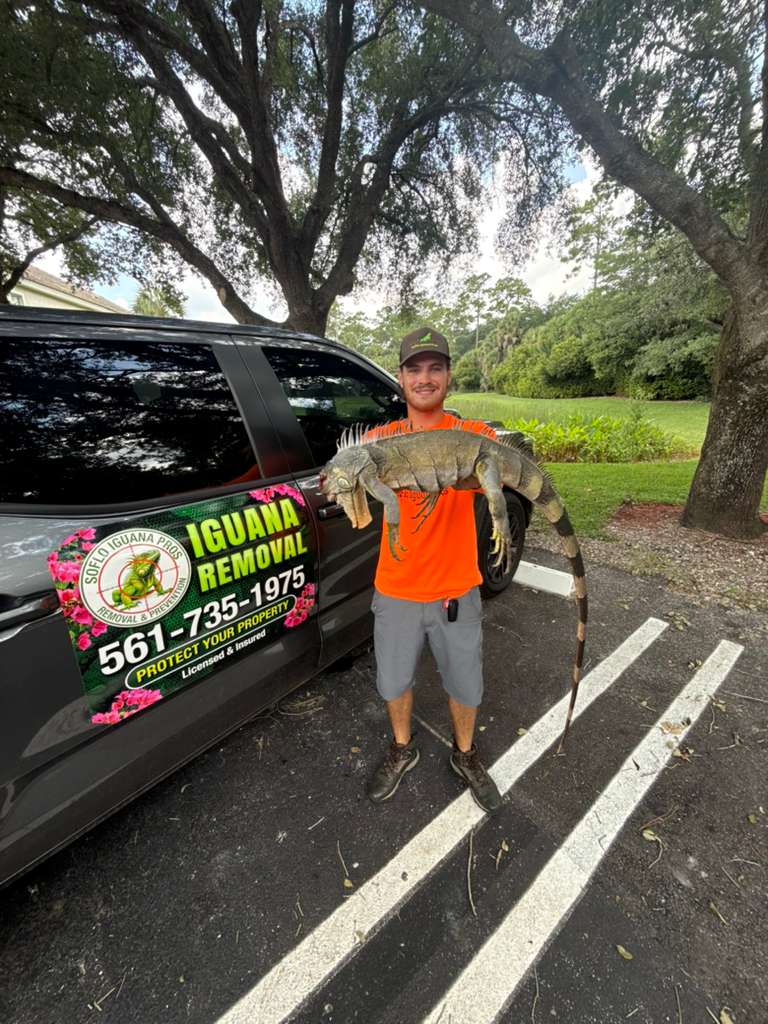
Green iguanas are not native to Florida. They're a non-native, invasive species that established breeding populations in South Florida beginning around the 1960s and 1970s, and they've spread widely since. The native reptiles of Palm Beach County are things like anoles, skinks, native snakes, gopher tortoises, and alligators — animals that evolved here over a very long time. The green iguana simply arrived, found conditions similar to its home range, and stayed.
Because they're invasive, Florida law and wildlife policy treat them very differently from native wildlife. Native species get legal protection and, in many cases, you can't touch them without a permit. Green iguanas sit on the opposite side of that line, which changes what you're allowed to do about the ones on your property.
Why 'invasive' is more than a label
Invasive doesn't just mean 'from somewhere else.' It means the species spreads on its own and causes harm — ecological, economic, or both. Green iguanas compete with native wildlife for nesting banks and browse, and they cause real property damage by burrowing into seawalls, canal banks, and foundations across the county.
That combination is why the state actually encourages removing them rather than tolerating them. Along a C-51 canal bank or a Lake Worth Lagoon seawall, a colony of iguanas isn't a quirky bit of local color — it's an animal actively undermining the bank while eating the landscaping planted to hold it.
- They burrow into and destabilize seawalls, canal banks, and retention-lake edges
- They graze native and ornamental plants alike, changing what grows on a bank
- They leave droppings on the pool decks, docks, and seawall caps people use
- They breed fast enough to overwhelm a bank with no natural predators to check them
Common questions
If iguanas aren't native, can I remove them myself?
On your own property, generally yes — Florida lets homeowners remove green iguanas humanely year-round without a special permit. Most people still call a pro because catching and handling a big adult safely is harder and more dangerous than it looks, and there are rules about how it's done.
Are iguanas protected in Florida?
No. As an invasive species, green iguanas do not get the protections native wildlife receives. They still have to be handled humanely under the state's anti-cruelty rules, so how you remove one is regulated even though the fact that you can remove it is not.
How long have iguanas been in Florida?
Breeding populations trace back to roughly the 1960s and 1970s in South Florida, and they've expanded steadily since. In Palm Beach County they're now a permanent fixture on waterfront and community properties rather than an occasional oddity.