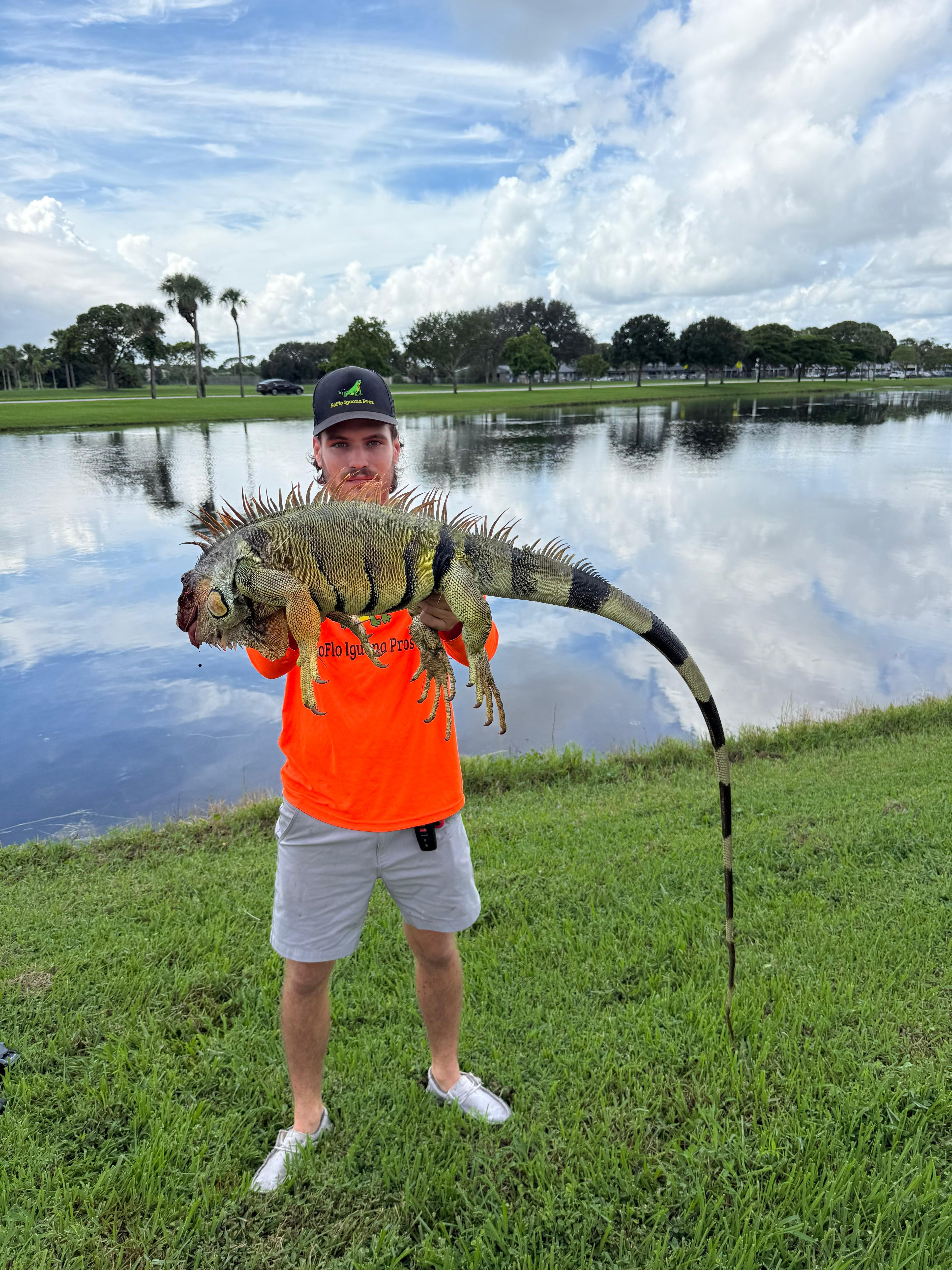

One female can lay 20–70 eggs. Clear a property before the nests hatch and you save yourself the summer — here's how to use the spring window.
Spring is the leverage point in the whole iguana year. It's when females dig nesting burrows and lay their clutches — roughly 20 to 70 eggs each — into canal banks, seawall backfill, community lake shores, and beds against foundations. What you do in these weeks decides whether your summer is quiet or overrun. Almost everything else we do is easier or harder depending on how the spring went.
The math is unforgiving. One undisturbed female on your bank isn't one iguana next year — it's potentially dozens, and a handful of those reach breeding size themselves. That's how a property goes from 'we see one on the dock sometimes' to a resident colony in a season or two.
What a nesting burrow looks like
A nesting burrow is a tunnel dug into soft, sun-exposed ground, usually angled down into a canal or lake bank, a seawall backfill, or a bed against a warm foundation. The giveaway is a fan of freshly turned soil at the mouth and, often, a female standing guard nearby in the days around laying. Females will test several spots and dig practice holes before committing, so scattered fresh diggings in March and April are a signal, not an accident.
Once she's laid and covered the clutch, the eggs incubate underground for a stretch of weeks on their own — she doesn't tend them. That gap between laying and hatching is the window you're trying to work inside.
Get ahead of the hatch
Clearing resident iguanas and collapsing nesting burrows before the eggs hatch stops the population spike before it starts. Wait until summer and you're not removing a handful of adults anymore — you're chasing dozens of fast, wary juveniles across the property, and juveniles are harder to trap and quicker to scatter into the water than the big adults are.
This is why we push waterfront and lakeside clients to book their spring assessment early rather than waiting for the problem to look bad. The banks in Wellington's community lakes, the canals off the Intracoastal, and the older Boca and Delray waterfront all get worked over in the same few weeks, and getting on the calendar before the hatch is the difference between a clear-out and a summer-long chase.
- Book the property walk in early spring, before diggings turn into laid clutches.
- Remove and trap resident adults — especially the females holding territory on the bank.
- Locate and collapse active nesting burrows so clutches don't incubate to a hatch.
- Wrap climbs and harden the bank edge so cleared ground doesn't get re-colonized.
If you're already seeing hatchlings
If summer arrived before you did anything, it isn't hopeless — it's just a bigger job. Hatchlings are small and green and blend into the shrubs, and they'll den in the same banks the adults used. The approach shifts toward heavier trapping and repeated visits to catch the young as they move and grow, plus the same burrow and climb-route work so the next spring doesn't repeat the cycle. It's more work than a spring clear-out, which is the whole argument for acting in March.
Questions we hear
When exactly is iguana nesting season in Florida?
It concentrates in spring, with hatchlings appearing weeks after laying. The precise timing shifts a little year to year with the weather and how warm the winter was, so the safe move is to act early in the season rather than wait for a calendar date.
What does an iguana nest look like?
It's a dug burrow in soft, sunny ground — often on a canal or lake bank, in seawall backfill, or against a foundation — with a fan of loose soil at the mouth. Fresh diggings and a female lingering nearby in spring are the red flags to watch for.
Is it worth doing anything if I've already got hatchlings?
Yes, though it's a larger job than a spring clear-out. Young iguanas den in the same banks and grow into next year's breeders, so trapping them out and collapsing the burrows still breaks the cycle. It just takes more visits than getting ahead of the hatch would have.
Services in this guide