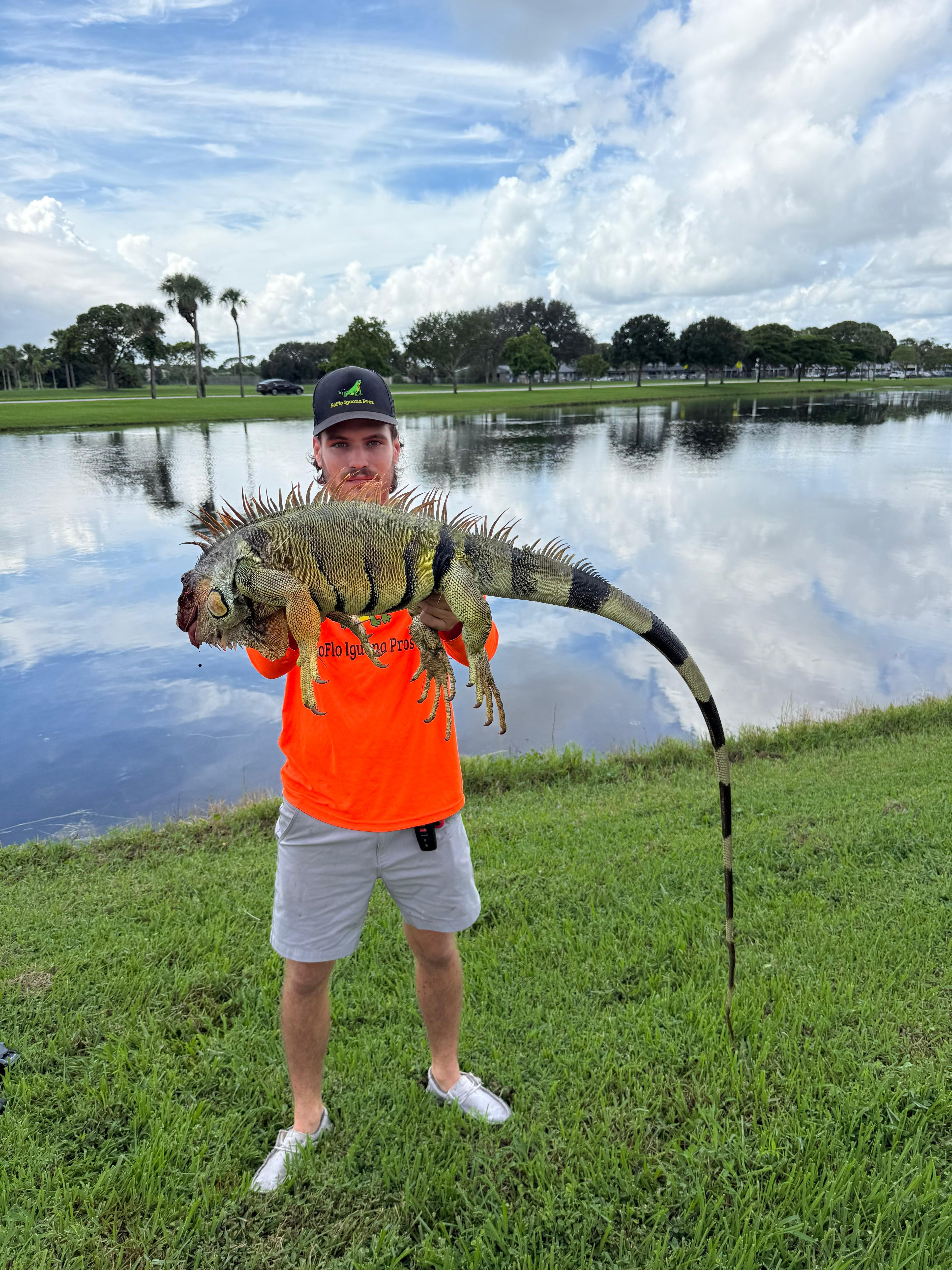
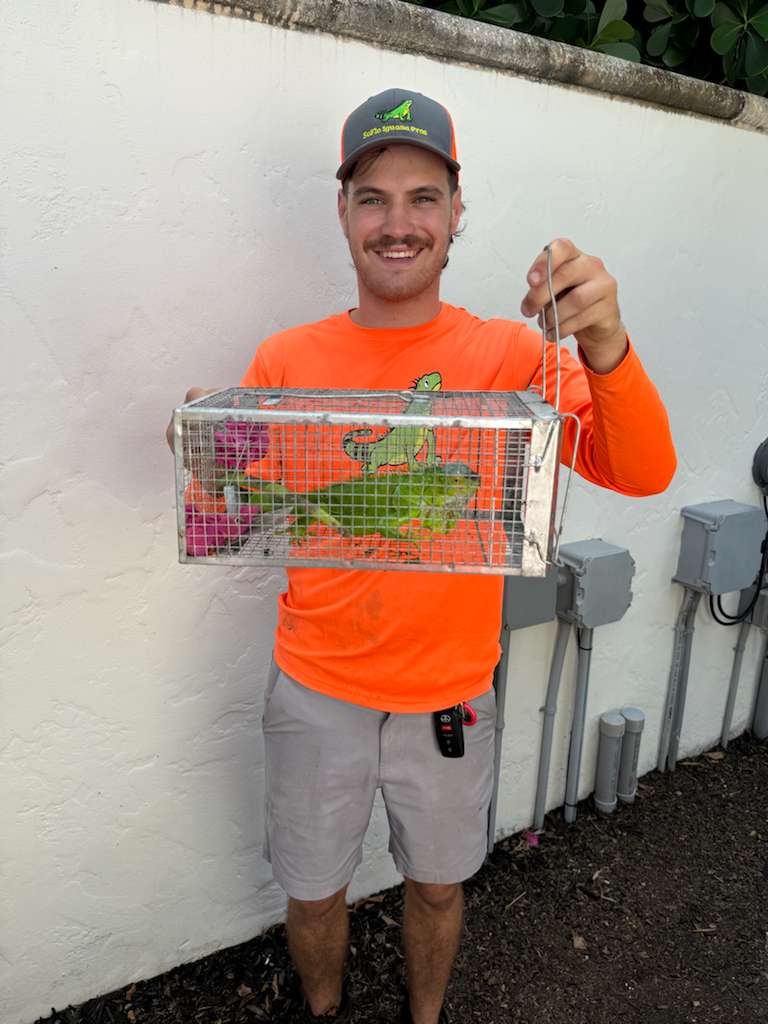
Adult green iguanas commonly reach around 5 feet from nose to tail tip, with large males getting bigger, and heavy adults can weigh 15 pounds or more. Much of that length is tail, but the body and legs are substantial — which is why a full-grown iguana can dig a burrow big enough to undermine a seawall, a pool deck, or a paver walkway. The animal basking on your dock railing is a lot heavier than it looks from the patio.
Males generally outgrow females and develop bigger jowls, a taller dorsal crest, and heavier heads, especially in breeding season. Females stay a bit smaller but are the ones digging nesting burrows, so 'smaller' does not mean 'less of a problem' on a property.
Why size drives the damage
The bigger the iguana, the bigger everything it does. A large adult pushes a wider, deeper burrow, eats more landscaping per day, and produces more droppings on the surfaces people use. On a Lake Worth Lagoon seawall or a finger canal in a place like Boynton Beach, a couple of mature adults denning in the backfill can hollow out enough soil behind the wall to matter.
- Nose-to-tail length: commonly up to about 5 feet in mature adults
- Weight: heavy adults can exceed 15 pounds
- Tail: often more than half of total length, and the animal's main weapon
- Males vs. females: males run larger with bigger jowls and crest; females still dig nesting burrows
Sizing prevention to the animal
Size matters for prevention, too. A tree wrap or piling guard has to be tall and smooth enough that a big adult can't simply reach over the top or get a claw-hold above it, which is why sizing the hardware to the animals actually on the property is part of doing it right. A guard that stops a juvenile can be trivial for a five-foot male to defeat.
When Nick walks a property, part of the read is how large the resident animals are, because that sets how tall the barriers need to be and how deep the burrows are likely to run. Guessing small is how prevention fails a month after it goes in.
Common questions
How fast do iguanas grow?
Quickly in South Florida's climate. Hatchlings a few inches long can become sizable juveniles within a year given the year-round warmth and abundant food, which is part of why an unmanaged property fills up so fast. Reaching full adult size takes longer, but they're big enough to cause problems well before then.
Are bigger iguanas more damaging?
Generally yes. Larger adults dig deeper, wider burrows and eat more landscaping, and mature females are the ones laying the clutches that turn a couple of iguanas into a colony. Removing the big established adults usually does more for a property than chasing the little ones.
How big is the biggest iguana you'll find on a property?
The largest resident males on a heavy waterfront property can push toward five feet and feel surprisingly heavy in hand. Those are the animals that do the structural burrowing and the ones you least want a homeowner trying to grab off a seawall unassisted.