
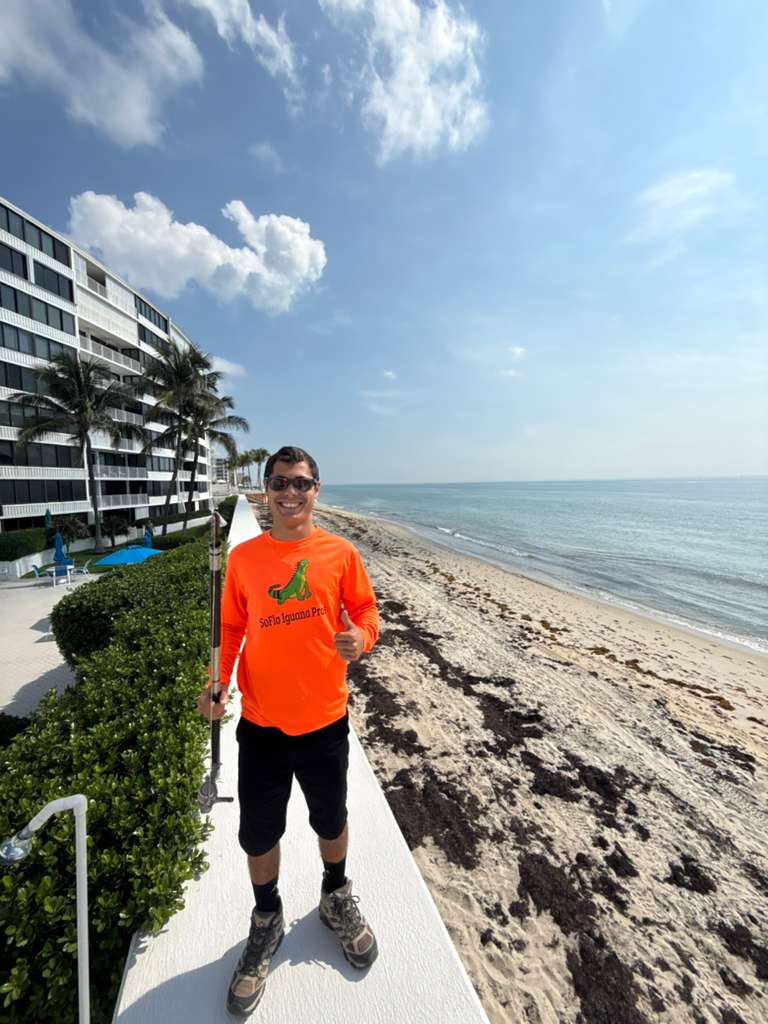
A waterfront home in Palm Beach County is the hardest kind of property to keep clear, because the canal or Intracoastal is an endless supply line of iguanas and the seawall, dock, and lush landscaping are everything they want. 'Iguana-proofing' one is really about stacking barriers and keeping resident numbers low, not achieving a one-and-done seal. Anyone who tells you they can permanently seal a canal lot against iguanas is selling you something that doesn't exist.
A full approach usually layers several measures that each close a different route. Because the water keeps feeding new animals in, monitoring ties the whole thing together so re-colonization gets caught early rather than rebuilding a colony over a season.
What a full waterfront stack looks like
Each piece addresses a specific weakness of a waterfront lot. Leave one out and the animals tend to concentrate on the gap.
- Seawall exclusion and burrow backfill along the water
- Piling guards on the dock so they can't climb up to bask
- Tree wraps on climbable and fruit trees
- Screen guards on the pool cage's lower panels
- Food-source cleanup in the beds and under fruit trees
- Scheduled monitoring to catch newcomers off the canal
Setting the right expectation
On open water the honest target is consistently low pressure, not zero. That's a livable, achievable outcome — a yard that's quiet most of the time with the occasional newcomer handled quickly — and a far cry from the property being overrun. We'd rather commit to that and deliver it than promise zero and disappoint you the first time an iguana comes off the canal.
Which piece matters most
If you can only start with one thing, start with the seawall. It's the main entry point, the prime basking spot, and the main burrow site all in one, so getting it right does more than any other single measure. Everything else — dock, trees, cage, beds — layers on top of a seawall that's been handled properly.
Common questions
Is one big install enough, or do I need ongoing service?
The barriers are largely a one-time install, but the canal doesn't stop feeding animals in. Most waterfront clients pair the install with monitoring so newcomers don't quietly rebuild a colony over a season. On open water, the monitoring is what keeps the install worth what you paid for it.
Which measure matters most on the water?
Usually the seawall — it's the main entry, the best basking spot, and the main burrow site all in one. Everything else layers on top of getting the seawall right. If budget forces you to phase the work, the seawall is where we'd start.
Can I really get to zero iguanas on a canal?
Honestly, no — not permanently. New animals arrive off the water constantly. What's achievable is consistently low, controlled pressure with newcomers caught early, which for most owners is the difference between an occasional sighting and a yard full of iguanas.

