
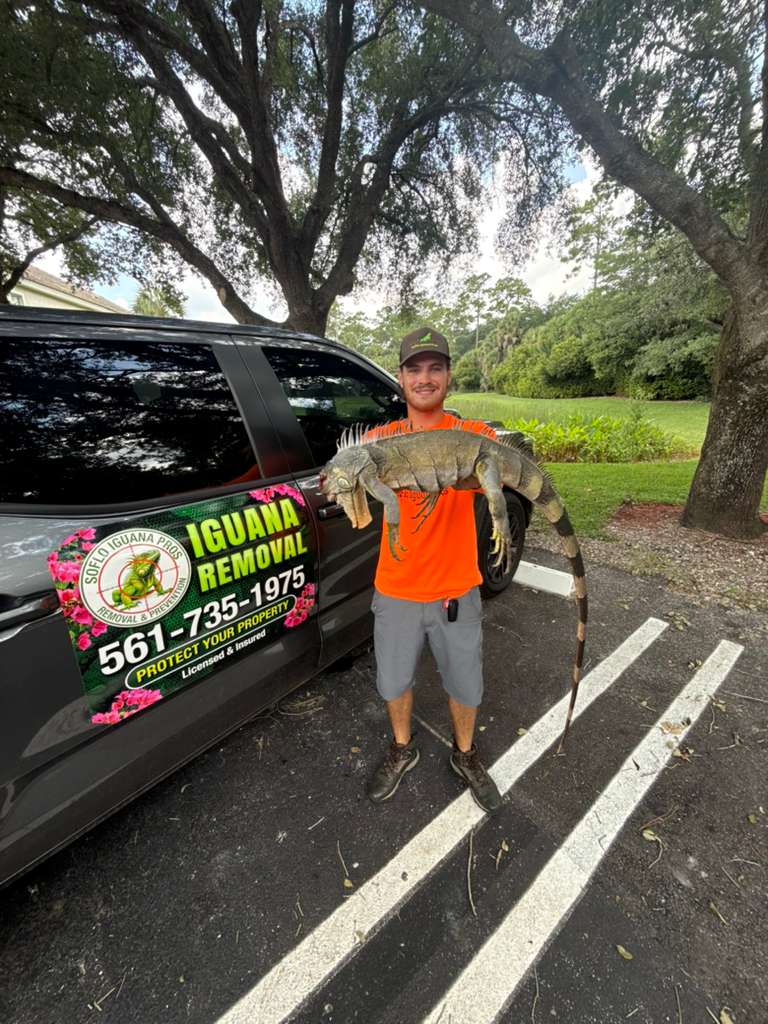
Removal and prevention are two halves of the same job. Trapping and removing the iguanas on your property clears today's problem, but if you leave the burrows open, the fruit dropping, and the trees climbable, you've created a vacant, fully-stocked habitat — and on the water, new iguanas move into it fast. Removal without prevention is exactly why some properties feel like they're paying to solve the same problem over and over.
Whether you need much prevention depends on the pressure. A lightly-affected inland lot might be fine with a good clear-out plus burrow backfill and little else. A canal or lakefront property almost always needs barriers and some ongoing monitoring, because the supply of new animals never really stops. The right amount of prevention scales with where you are and how hard the pressure is.
Why an empty yard gets re-colonized
An attractive property that's just been cleared is, from an iguana's point of view, prime vacant real estate. Everything that drew the last animals is still there minus the competition.
- Open burrows are move-in-ready dens for the next animal
- Fruit, flowers, and fresh turf still supply the food
- Climbable trees and un-guarded pilings still offer access
- On the water, the canal keeps sending new animals to fill the vacancy
Right-sizing it
The goal isn't to sell every client a full waterfront install. An inland lot with light pressure genuinely may not need much beyond removal and backfill, and we'd rather tell you that than pad the job. A waterfront lot, on the other hand, will keep re-populating without barriers and monitoring, so under-doing it there just sets up repeat visits. Matching the prevention to the property is what keeps you from either overpaying or paying twice.
Common questions
Can't I just have them removed again if they come back?
You can, but on the water that turns into repeat visits for the same issue as the canal keeps re-supplying. Backfilling burrows and adding barriers usually costs less over time than re-clearing a property every few months. Removal alone is treating the symptom, not the habitat.
How much prevention is enough?
It scales with pressure. We'd rather right-size it to your property than sell a heavy install an inland lot doesn't need — or under-do a waterfront lot that does and end up back out there in a season. The walkthrough is where we figure out which situation you're in.
If I'm inland, do I still need anything after removal?
Usually at least burrow backfill, so the dens don't invite a replacement, and a look at obvious draws like fruit trees. Beyond that, a light inland lot can often stabilize without much more. It's the waterfront and community properties that reliably need the fuller barrier-and-monitoring approach.