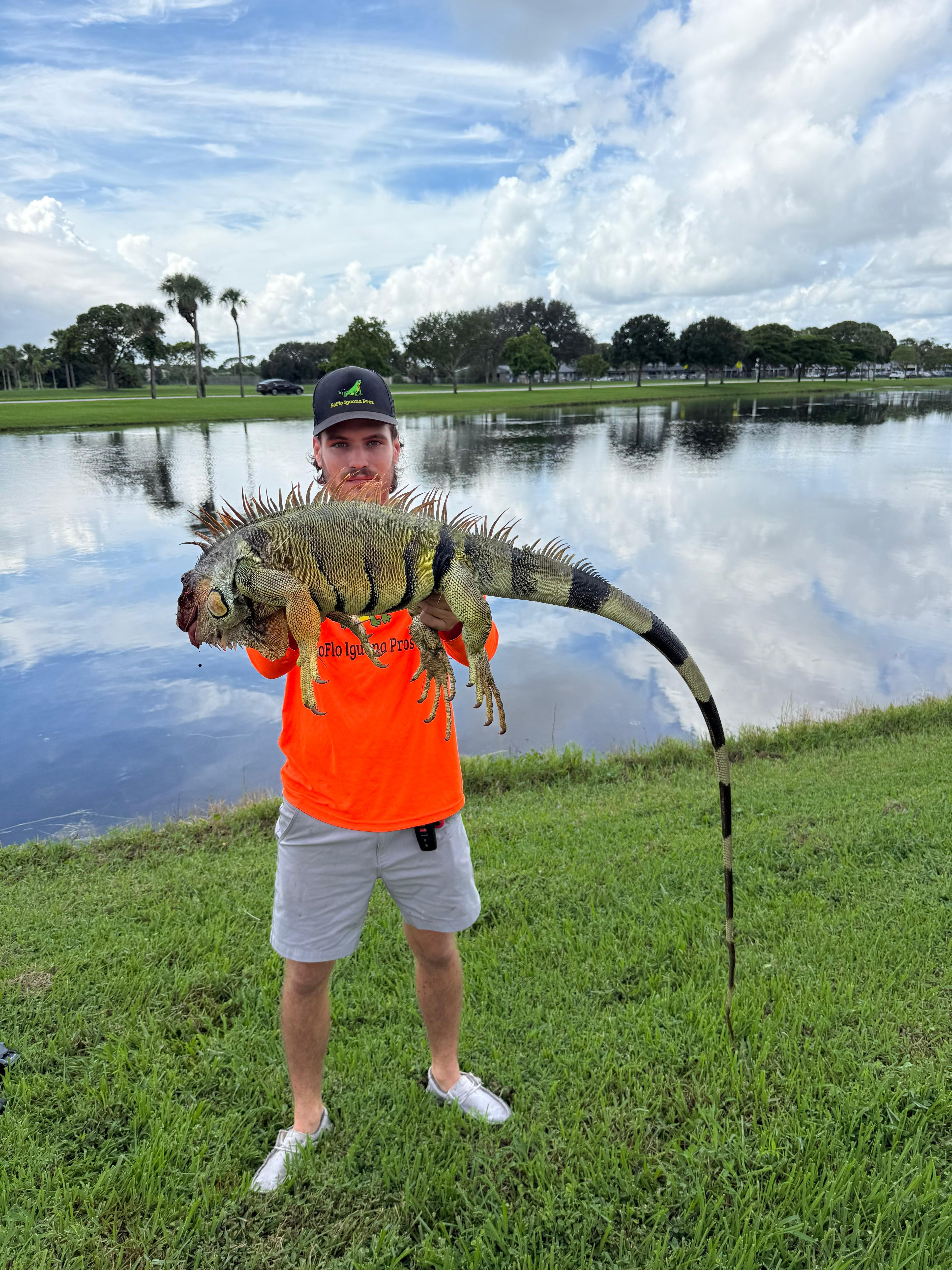

Green iguanas breed fast. A single female can lay a clutch of roughly 20 to 70 eggs, typically digging a nest burrow to lay in during the spring after a winter breeding season. Not every egg survives — some nests flood, some get raided, plenty of hatchlings don't make it — but in South Florida's climate enough do that an unmanaged property can go from a couple of visible iguanas to a colony within a single season.
The math is the whole problem. One female laying dozens of eggs, with no predators pruning the numbers and warmth that keeps everyone active year-round, compounds quickly. That's why the properties that stay on top of iguanas are the ones that never let a breeding population get established in the first place.
The nesting season is the leverage point
Timing is everything with breeding. Clearing a property before spring nesting — and collapsing the burrows where females dig in to lay — breaks the cycle before the numbers jump, instead of chasing hatchlings all summer. Once eggs are in the ground on a canal bank, you've traded one manageable adult for dozens of future problems.
In Palm Beach County the softest, most attractive nesting ground is exactly the ground you want protected: canal and retention-lake banks, seawall backfill, and beds against foundations and pool decks. A female picks those spots for the same reason they're valuable to you — loose, warm, well-drained soil near water.
- Breeding runs through the cooler months, with nesting concentrated in spring
- Clutches commonly range from about 20 to 70 eggs per female
- Females dig burrows to lay, then leave the eggs to incubate in the warm soil
- Hatchlings emerge weeks later and disperse into cover along the bank
Common questions
When do iguanas lay eggs in Florida?
Nesting concentrates in spring, following a cooler-season breeding period. Females dig burrows to lay their clutches and hatchlings appear weeks later, which is why spring is the leverage point for getting ahead of the population before it multiplies.
Where do iguanas nest?
In burrows dug into soft ground — canal and retention-lake banks, seawall backfill, and beds against foundations and pool decks. Those same burrows are what damage the hardscape, so the nesting behavior and the structural damage are really the same problem.
How quickly can a couple of iguanas become an infestation?
Within a single season on a good waterfront property. One or two females laying dozens of eggs each, with no predators and year-round warmth, can seed a colony fast — which is why removing the breeding adults before spring matters far more than reacting in summer.