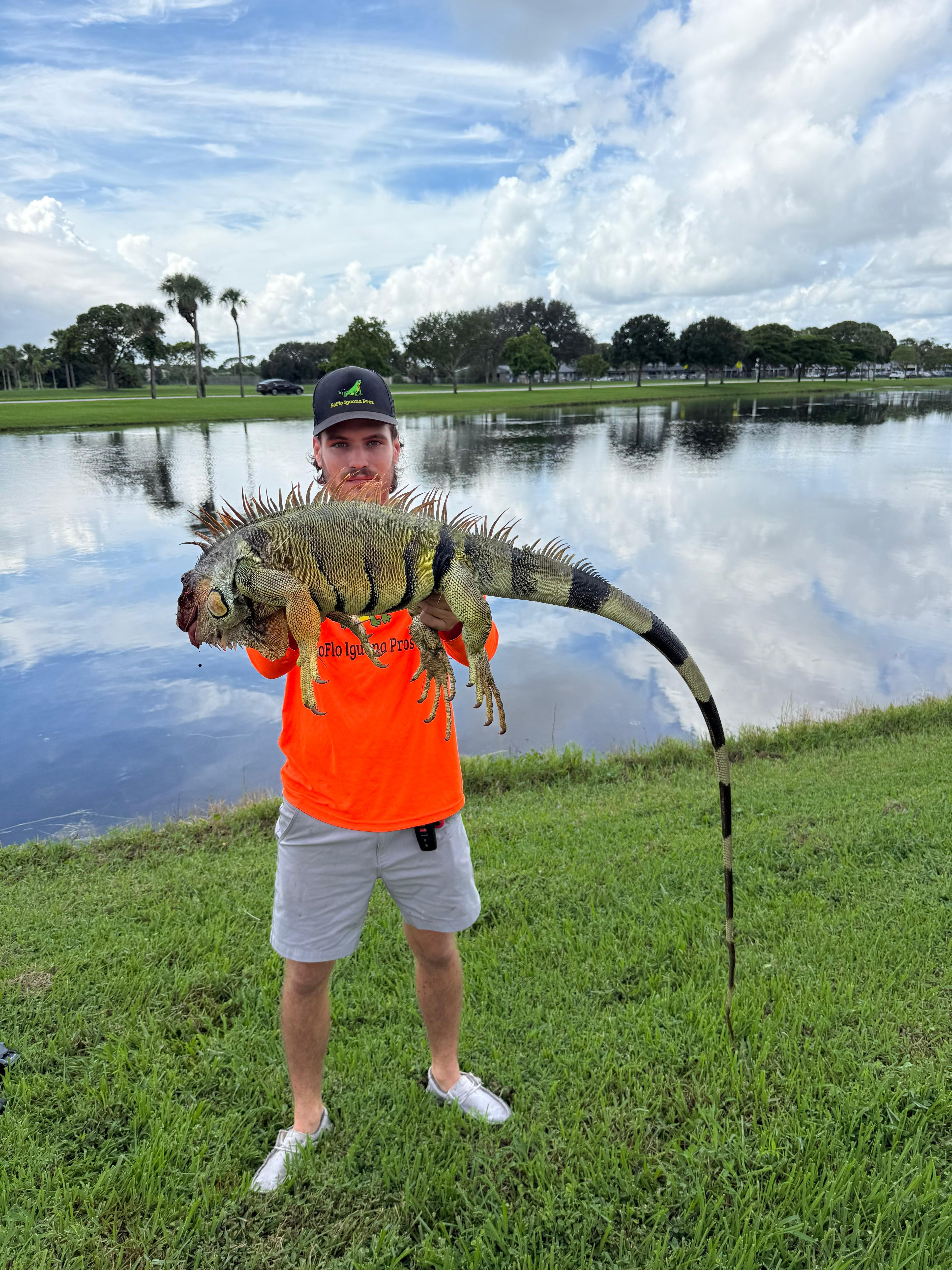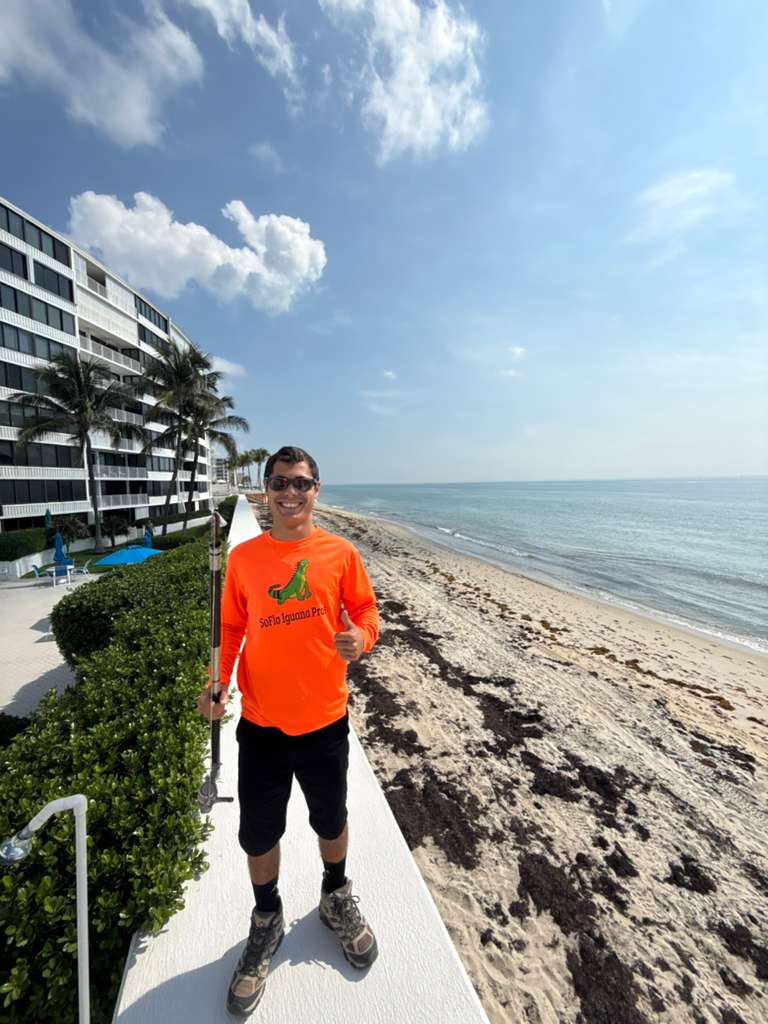

A hotspot in our backyard
Lake Osborne, on the west side of Lake Worth Beach, is one of the iguana hotspots we know best — it's practically in our backyard. The lake and its connected canals give iguanas long stretches of soft bank to burrow into, and the lakeside lots see heavy bank erosion where the dens undercut yards, boat lifts, and seawalls.
The Lake Osborne Heights neighborhood and the properties backing onto the water carry steady pressure, and John Prince Park nearby keeps a healthy population close by.
Why a lakeside lot won't stay clear alone
Because Osborne connects to the wider canal system, a lakeside lot won't stay clear on a single visit — the bank refills from the rest of the shoreline.
- Soft lake bank invites burrowing along the whole frontage
- Dens undercut yards, boat lifts, and seawalls
- Connected canals repopulate a cleared stretch
- John Prince Park keeps a steady source population nearby
Mapped, cleared, and monitored close to home
We map the burrows along your frontage, remove what's there, and collapse and pack the dens so the bank is sound again, then keep an eye on the runs. Being based right here in Lake Worth Beach means we can respond fast and monitor these lakefront properties closely across a season. For the neighborhood context, our Lake Worth Beach page is at /service-areas/lake-worth-beach.
Common questions
Iguanas are burrowing into my Lake Osborne bank — can you stop the erosion?
We remove the iguanas and collapse and pack the burrows so the bank is sound again, then monitor the runs, since a lakeside lot refills from the rest of the shoreline.
Do you cover the Lake Osborne area specifically?
Yes — it's right by our shop in Lake Worth Beach, so it's one of the fastest and most closely monitored areas we work.
Why does my lakefront keep getting new burrows?
Lake Osborne connects to the canal system and sits near John Prince Park, so animals travel in along the shoreline. That's why ongoing monitoring holds better than a single visit.