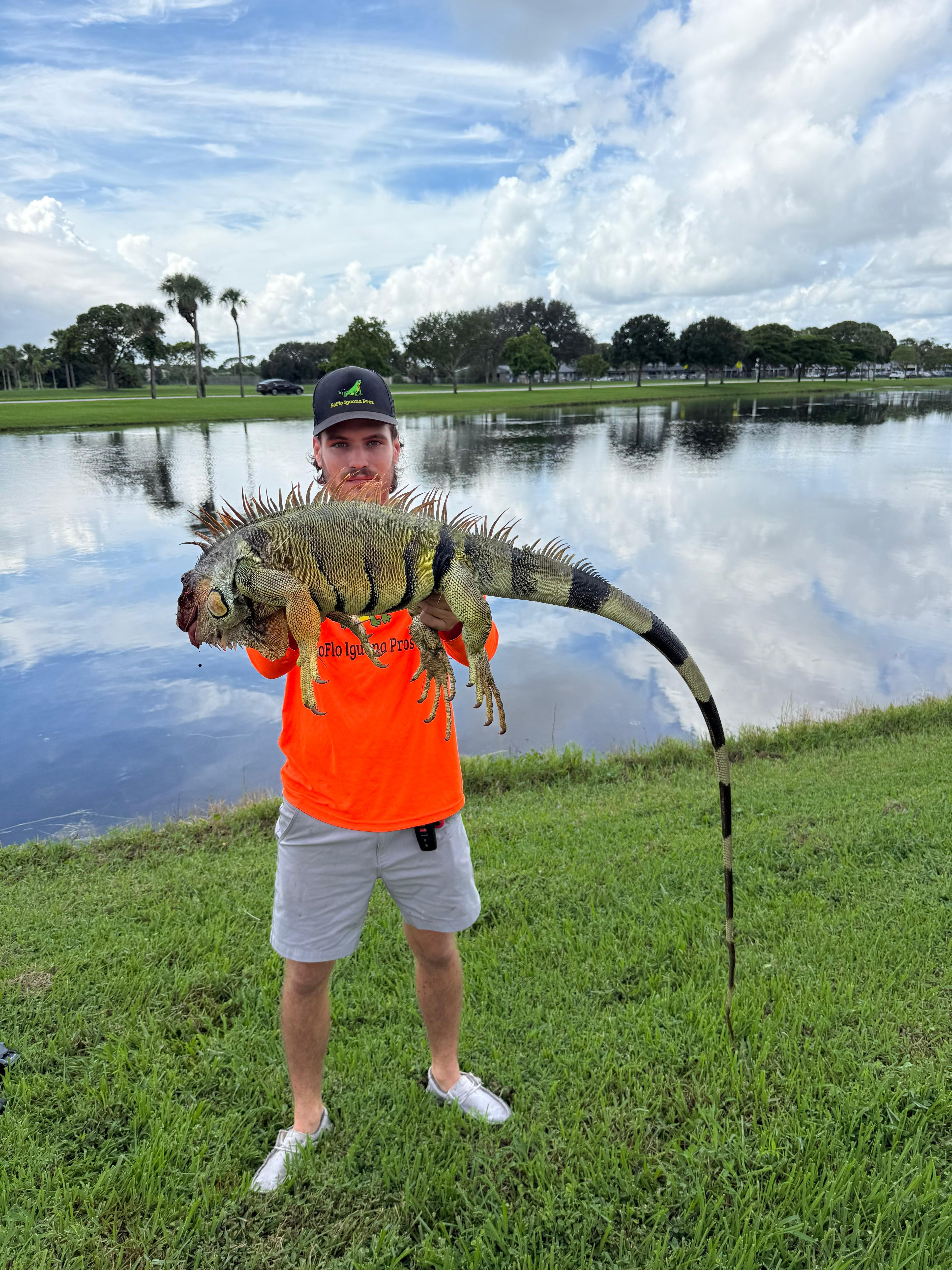

Iguanas are cold-blooded, meaning they rely on outside heat to stay active. When temperatures drop far enough — roughly into the 40s°F and below for a sustained stretch — their systems slow down, they become sluggish, and they can go 'cold-stunned,' losing the muscle control that keeps them gripping a branch. That's when they drop, and it's a genuine South Florida phenomenon during the occasional hard cold snap.
It makes for memorable local news — the falling-iguana forecast is a real thing in Palm Beach County during a cold front — but for a property owner the important part is what it does and doesn't mean. A yard littered with motionless iguanas one cold morning is not a solved iguana problem.
Cold-stunned is not the same as dead
A cold-stunned iguana usually isn't dead. Most revive as the day warms back up and the sun gets on them, then move off on their own. That's exactly why they shouldn't be assumed harmless or handled carelessly on a cold morning — a big one coming out of it can still bite, claw, and thrash hard, and a person leaning over what looked like a dead lizard can get a nasty surprise.
Larger adults actually tolerate cold a bit better than small ones thanks to their body mass, so the animals still lying there as things warm up may be the smaller ones, while the big males you most want gone are already reviving. It's an unreliable form of pest control at best.
- Cold-stun sets in during sustained temperatures roughly in the 40s°F and below
- Most 'downed' iguanas revive as the day warms — they are not dead
- A reviving iguana can still bite, scratch, and tail-whip, so don't grab bare-handed
- A hard freeze can kill some animals, but survivors repopulate as it warms
Common questions
Is a cold-stunned iguana dead?
Usually not. Cold-stun is temporary — most iguanas warm up and move off as the temperature rises, so they're not safe to grab bare-handed even when they look lifeless. Assume a downed iguana is going to come back to life and act accordingly.
Do cold snaps solve the iguana problem?
Only briefly. A hard freeze can knock the population back and kill some animals, but survivors return with the warmth and breeding resumes, so a cold snap isn't a substitute for removal and prevention. It's a temporary dip, not a fix.
What should I do if I find iguanas down in my yard after a cold night?
Generally keep pets and kids away and don't handle them, because they can revive and bite. If you want them gone rather than reviving on your seawall, that's a good moment to have them removed properly — just don't count on the cold to do the work for you.