
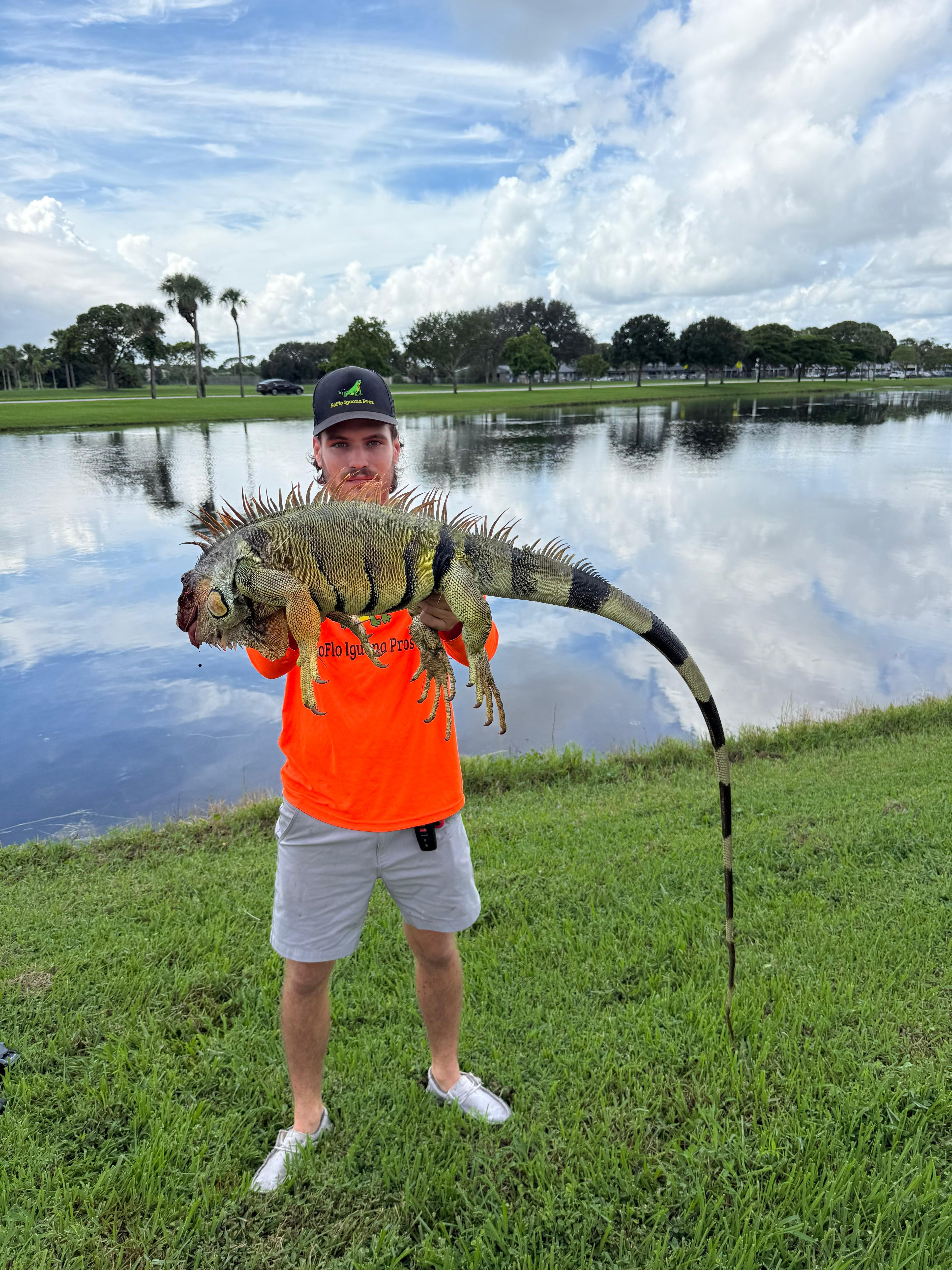
Green iguanas are invasive, but Florida still requires they be handled humanely under the state's anti-cruelty guidelines — you can remove them, but you can't cause unnecessary suffering. Those two facts sit side by side, and doing this responsibly means honoring both.
What humane practice looks like
On my end, humane practice comes down to reducing stress and injury at every step:
- Live-catch traps checked on a responsible cadence, so nothing sits stressed for long
- Controlled capture with a pole or net that keeps the animal from thrashing and hurting itself
- Calm handling rather than rough treatment
- Collapsing empty burrows and removing animals promptly rather than leaving jobs half-done
- Proper, sanitary disposal of any dead ones
The honest part about relocation
I'll be straight about the piece people find hardest: because green iguanas are invasive, they can't legally be relocated and released to spread the problem elsewhere. That means humane handling and lawful, responsible disposal go together under FWC rules — there's no releasing them into a preserve down the road. Humane doesn't mean 'set free somewhere nice'; it means handled without unnecessary suffering, within the law that governs an invasive species.
Common questions
Is iguana removal humane?
It's required to be — Florida's anti-cruelty rules apply even to invasive species. That means live-catch traps that get checked, controlled capture, and no unnecessary suffering at any step.
Can't you just relocate them?
No — as an invasive species they can't legally be released to spread elsewhere, so relocation isn't an option. Handling is done humanely and lawfully under FWC guidelines instead.
Doesn't invasive mean humane rules don't apply?
No, and that surprises people. The species being invasive changes what you can do with the animal afterward — no release — but it doesn't remove the requirement to handle it without unnecessary suffering. Both things are true at once.

