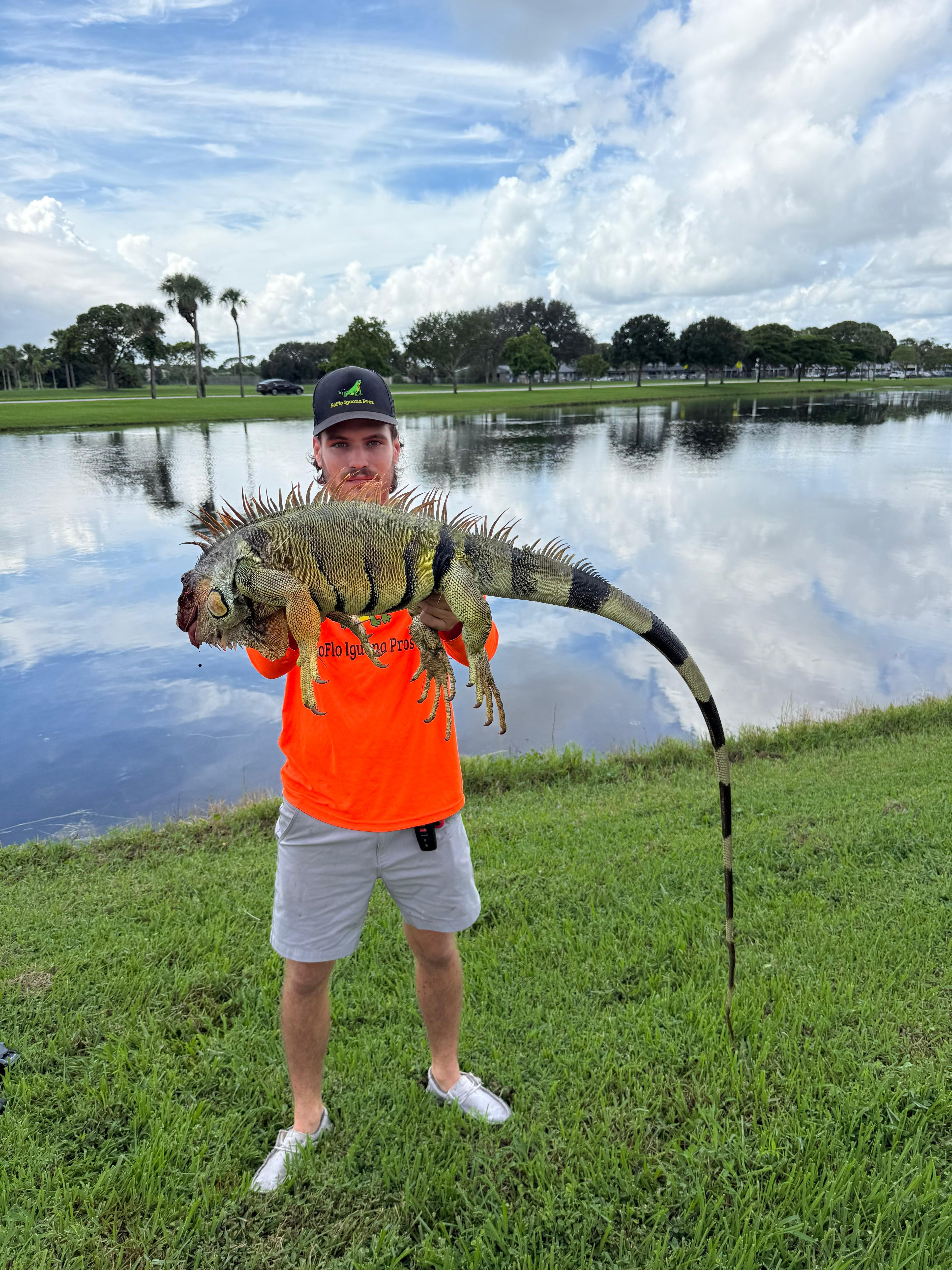

This is the question people ask most, and I'll answer it straight. Green iguanas are a non-native, invasive species, and Florida does not allow them to be relocated and released back into the wild — doing so just spreads the problem to someone else's property. So the feel-good picture of driving them out to a nice preserve isn't legal or real.
What that means in practice
In practice, captured iguanas are handled and disposed of humanely, in line with FWC's guidelines for invasive reptiles and the state's anti-cruelty rules. Two things govern it at once — the ban on releasing an invasive species, and the requirement to avoid unnecessary suffering — and responsible work honors both. I keep the focus of my work on doing that lawfully and without cutting corners.
If the specifics matter to you
Some situations come with their own requirements — an HOA policy, a golf course's expectations, a resident who wants particulars for their own peace of mind. If the specifics matter for your situation, that's a conversation I'm happy to have directly rather than paper over with a vague line. I'd rather tell you plainly how it works than dress it up.
Common questions
Are the iguanas relocated?
No — Florida prohibits releasing invasive iguanas back into the wild because it spreads them. They're handled and disposed of humanely under FWC rules instead, not driven off to a preserve.
Is what happens to them legal and humane?
Yes — handling follows FWC guidelines for invasive reptiles and the state's anti-cruelty rules. Humane treatment is required even though the species is invasive, and both apply at the same time.
Can I ask exactly what's done with them?
Absolutely — it's a fair question and I'd rather answer it directly than give you a vague line. If the specifics matter for an HOA policy or your own peace of mind, ask and I'll walk you through how it works under the rules.