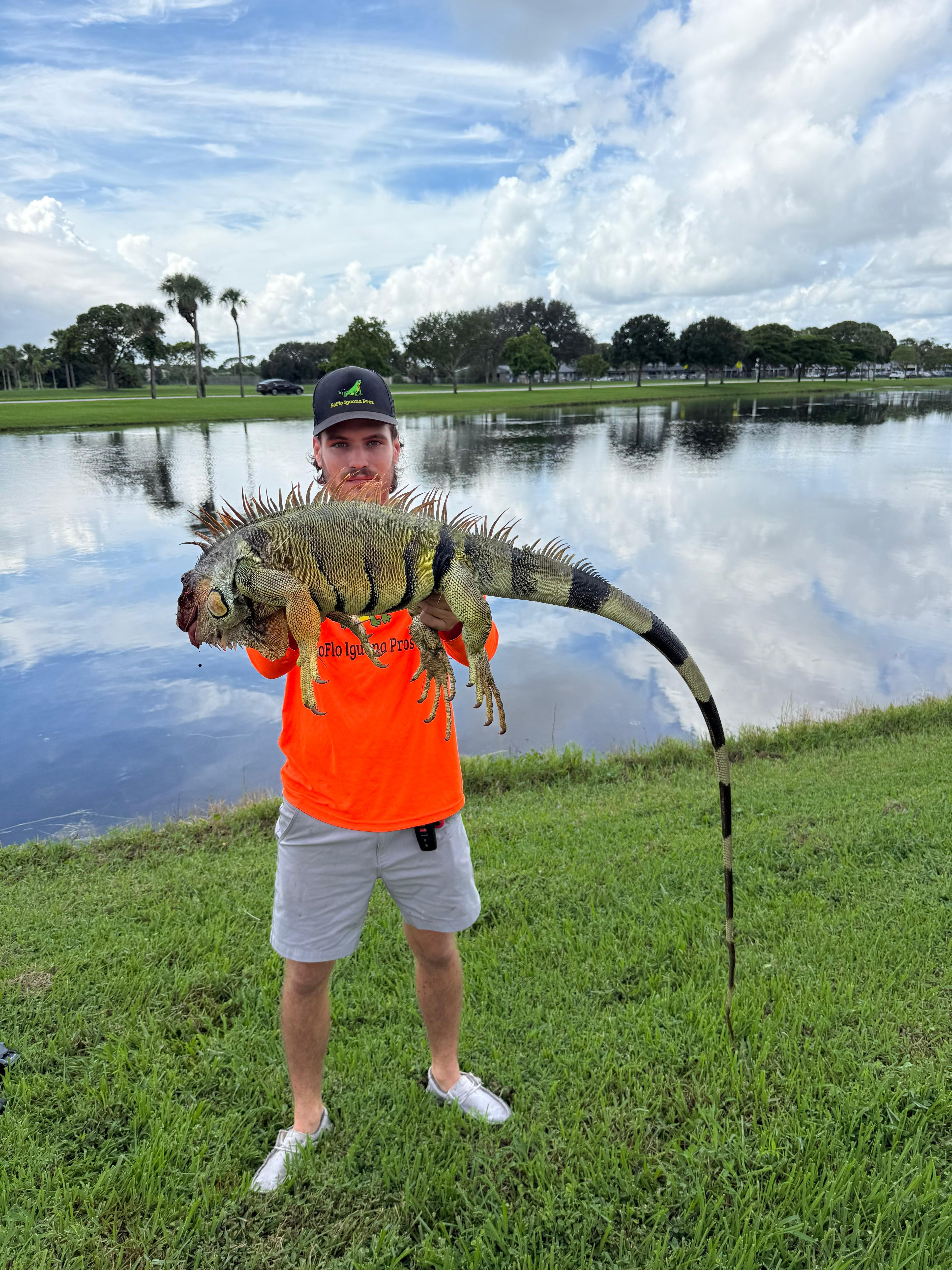
Green iguanas are excellent swimmers. They propel themselves with that long tail, tucking their legs against the body, and they use the water as an escape route — dropping off a seawall or bank and diving under the moment they feel threatened. They can stay submerged for a good while, which is why a canal or lake edge is both their favorite habitat and their built-in getaway.
This is not a fringe behavior; it's central to how they live. In their native range they bask over rivers and drop into the current to escape predators, and a Palm Beach County finger canal or the Intracoastal offers the exact same setup. The water is the reason waterfront properties carry so much iguana pressure.
Why the water beats a single visit
Because iguanas dive and disappear, a one-time visit rarely clears a heavy waterfront property. Some of the animals are simply in the water — or on a neighbor's bank across the canal — during the hour someone happens to be walking your seawall. You clear what you can see, and the ones that were submerged come right back onto the warm deck an hour later.
- They dive off seawalls and banks to escape and can stay under for an extended stretch
- They travel the waterline between properties, so today's cleared bank refills from next door
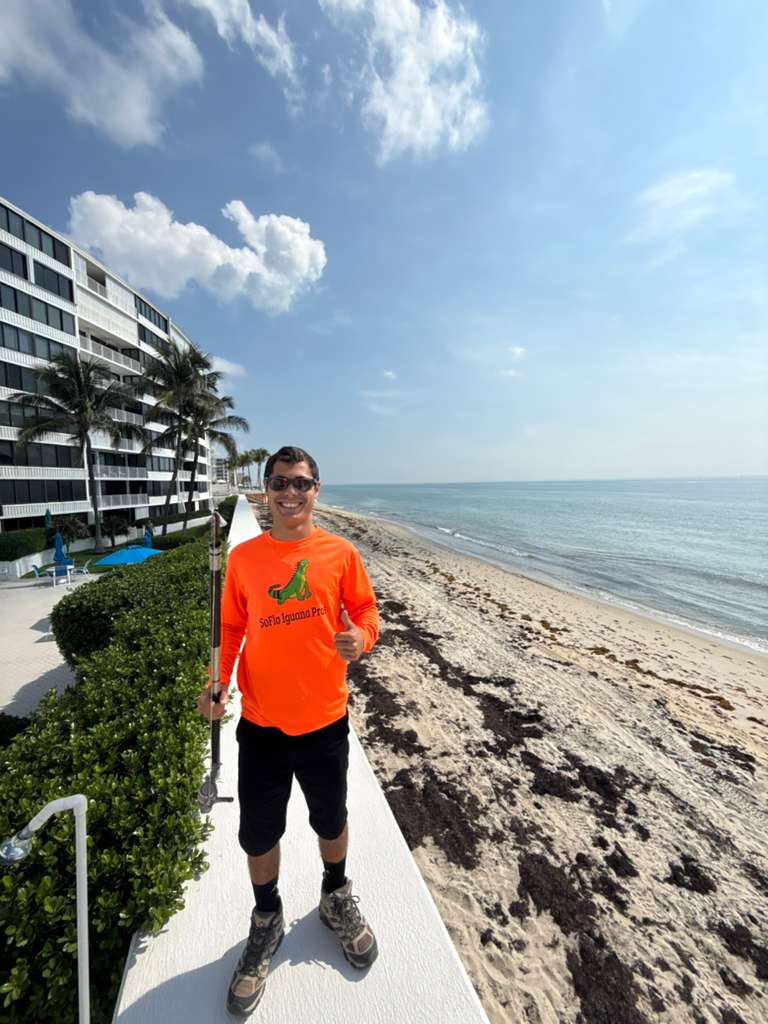
- They're active along the Intracoastal, the C-51 canal, Lake Worth Lagoon, and community retention lakes
- Some animals are always underwater or out of sight during any single visit
How SoFlo works waterfront the right way
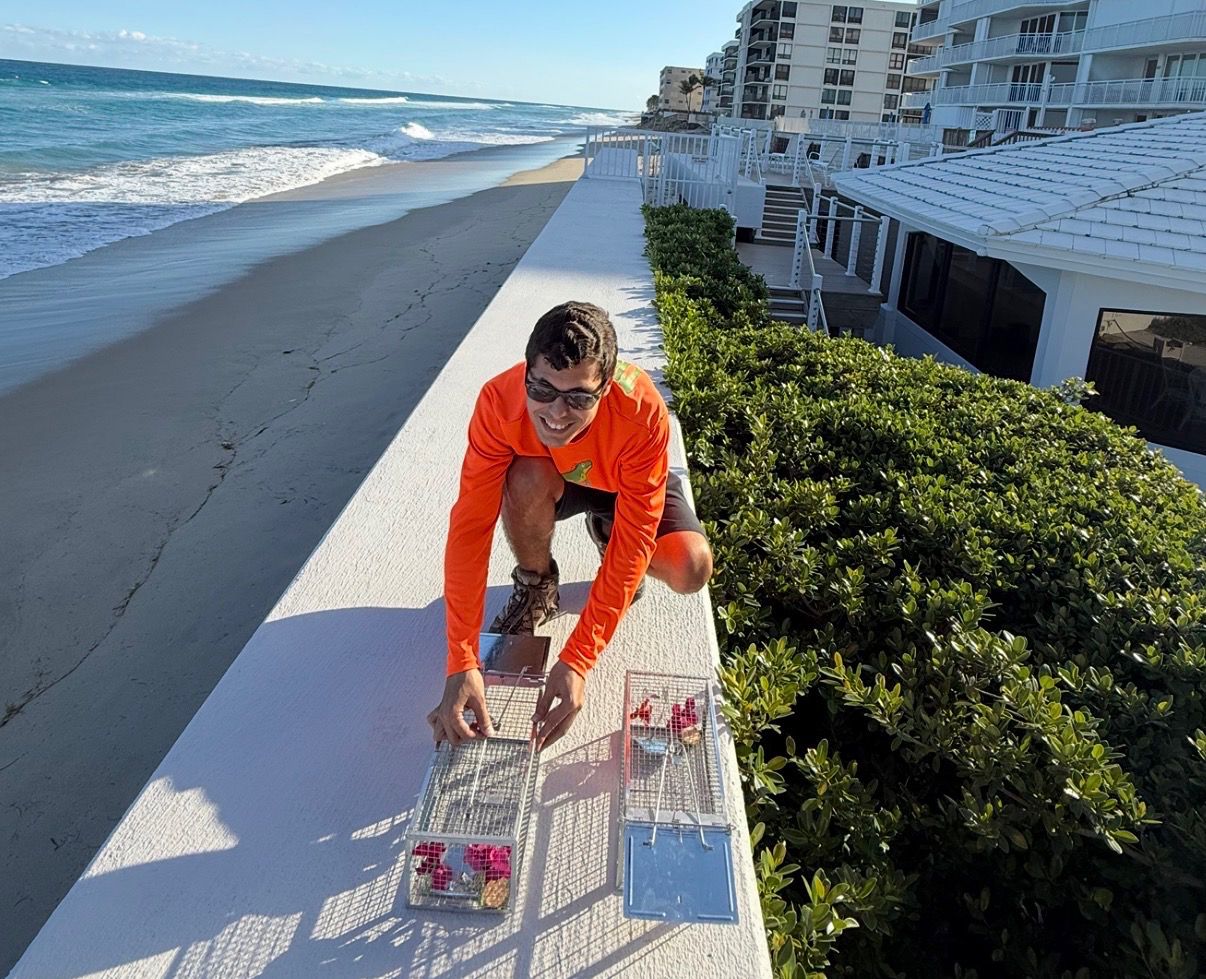
This behavior is exactly why monitored trapping along the waterline outperforms one-off removal on canals, lakes, and the Intracoastal. A trap line set on the routes iguanas actually travel keeps working over days and weeks, catching the ones that were submerged, feeding, or next door during the first pass. It plays the long game the animals are already playing.
For heavy waterfront addresses, Nick generally steers owners toward a monitored program rather than a single clear-out, because the water guarantees that a one-time sweep leaves animals behind. The goal is to work the routes until the pressure genuinely drops, not to declare victory after the visible iguanas scatter into the canal.
Common questions
Do iguanas come out of the canal onto my property?
Constantly. They travel the seawall and bank, bask on docks and decks, graze the landscaping, and retreat to the water when disturbed. Waterfront yards get worked over daily, which is why the canal edge is where prevention has to focus.
Why didn't the first visit get them all?
On the water, some iguanas dive and hide during a visit while others are simply on a neighbor's bank. You can only remove what's reachable that hour, so heavy waterfront properties do far better on a monitored program than a single clear-out.
How long can an iguana stay underwater?
Long enough to outlast a person walking the seawall — they can hold their breath for an extended stretch when escaping. That's the whole point from the iguana's side, and the whole reason a trap line that works the routes over time beats trying to grab them on one visit.