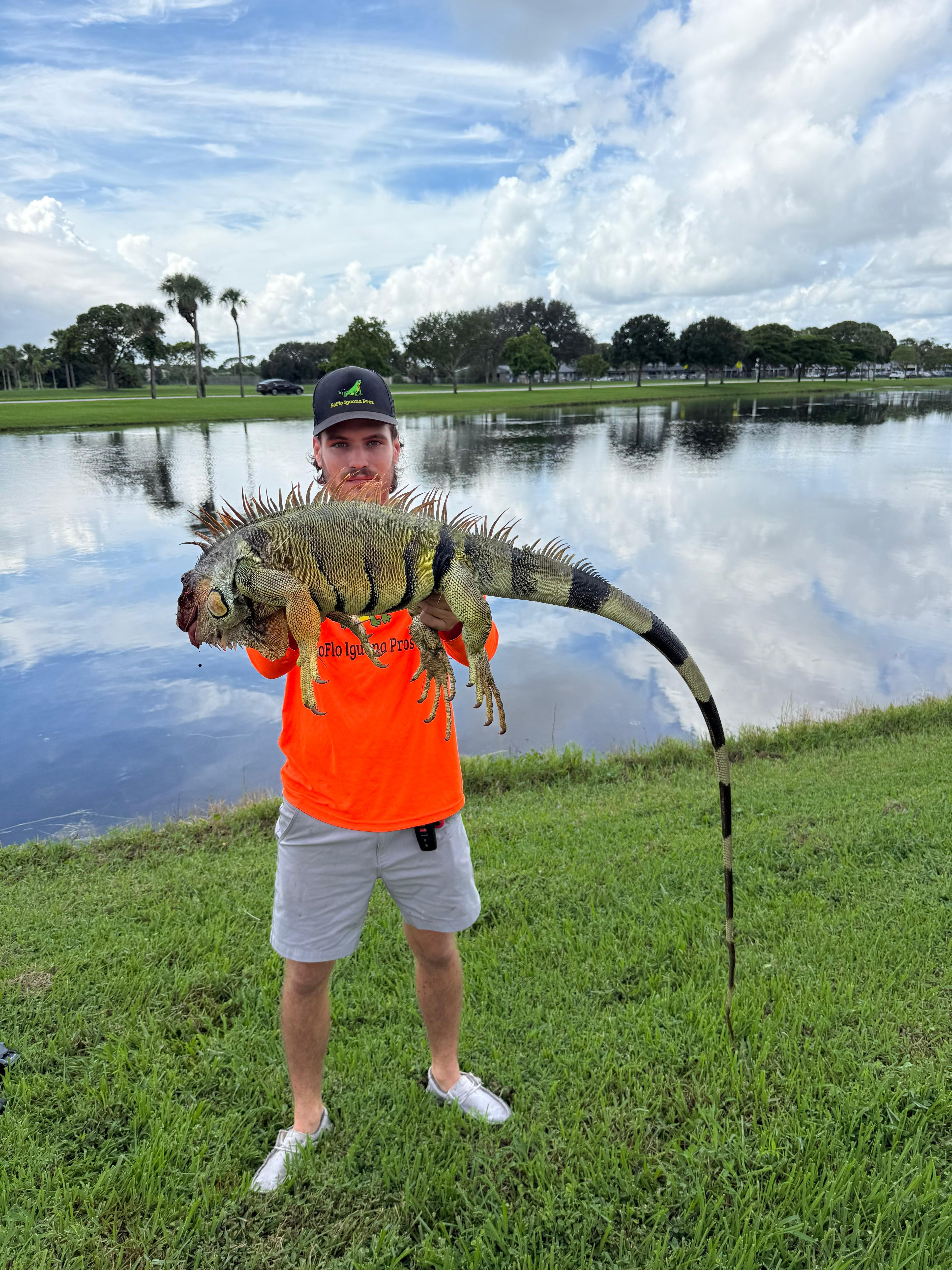
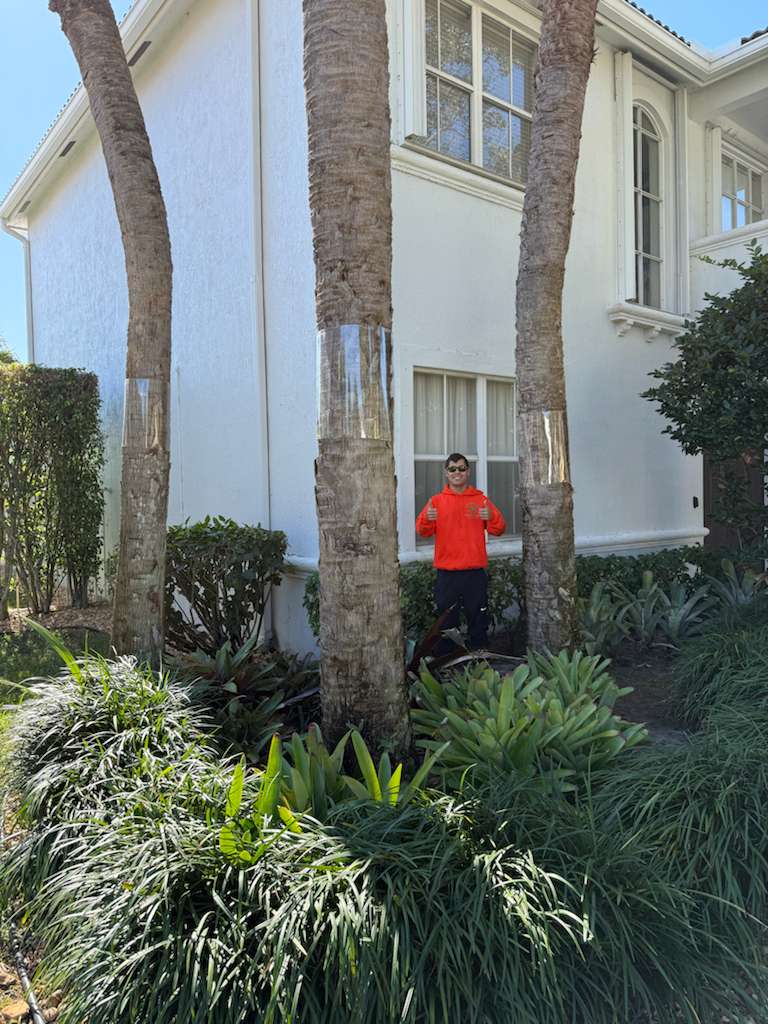
When I take on a Palm Beach County property, the first thing I do is walk it — not to count iguanas, but to map them. I'm looking for basking spots on the seawall and dock, burrow openings along the bank and against the foundation, and the routes they take between the two. That map is what tells me where to work and which method fits each spot. Two lizards sunning on a dock is a very different job from a bank honeycombed with dens, and I can't tell which you have until I've seen it.
From there it's hands-on. Depending on the situation I'll use a catch-pole, a net, or a live-catch trap, and I collapse and backfill the burrows so females can't nest in them. On a light property that can be a single visit. On a heavy waterfront lot, some iguanas are in the canal when I'm there, so it takes more than one pass to actually clear it.
The property walk, and why it comes first
Two houses on the same canal can need completely different work. One might have a single big male basking on the dock; the next has a dozen burrows undercutting the seawall. Pricing and method both come out of what I actually find, which is why I look before I quote instead of reciting a flat package over the phone.
On the walk I'm reading sign as much as animals. Iguanas leave a trail — droppings piled on the surfaces they use most, worn dirt paths between water and food, and burrow mouths the width of a coffee can dug into soft ground. Those tell me where they live even when they've dived into the canal at the sight of me.
What actually gets done on site
A first visit on a real infestation usually stacks several tools together in one trip. Here's the shape of it:
- Direct capture of any animal I can safely reach with a pole or net
- Setting a live-catch trap line on the basking and travel routes for the ones in the water
- Collapsing and backfilling burrows along the bank, seawall, and foundation
- Noting the food and access — fruit trees, dense beds, gaps at the pool cage — that keep drawing them
Why one visit isn't always enough
The honest limit of removal is the water. If your lot borders a canal, lake, or the Intracoastal, your seawall is an open border — I can clear what's here today, and animals travel in from the neighbor's frontage next week. That's not a failure of the work; it's the geography. Those properties hold their numbers with a monitored program, not a single clear-out, and I'll tell you which camp you're in before you pay.
Common questions
Do you have to see the iguana to remove it?
Not necessarily — a lot of the work is trapping and burrow collapse on the routes and dens I find, which keeps working when I'm not standing there. Direct capture is just one of the tools, and on many waterfront jobs it's the smallest part.
Will one visit clear my property?
On a light infestation off the water it often does. On a heavy waterfront lot it usually doesn't, because some iguanas are in the canal during any single visit and more travel in from adjacent lots — those properties do better on a monitored program.
What happens to the burrows?
I collapse and backfill them. An intact burrow is where a female nests, and a single clutch can be a few dozen eggs, so leaving the dens open just refills the property with hatchlings even after the adults are gone.