
Small changes to how a yard is planted and kept can quietly take it off an iguana's radar. Here are the ones that actually move the needle.
You can't relandscape iguanas out of existence, but you can quietly make a yard the less appealing one on the block — and on a waterfront street, less appealing than the neighbor's is often enough to send the pressure elsewhere. It's not one big change; it's a handful of small ones that together take away the food, the cover, and the easy routes iguanas are looking for.
None of this clears animals already living in your bank; that's removal's job. What it does is stop the yard from advertising itself, so once it's cleared it stays quiet. Think of it as the maintenance layer of prevention — the stuff a good landscaper can bake into how they already care for the property.
Take away the buffet
The first and biggest lever is food. A yard planted heavy with hibiscus and bougainvillea along the water, with fruit dropping unpicked, is feeding the colony. Shifting the plant palette and keeping the drop cleaned up does more than any spray.
- Trade the iguana favorites near the water for tough, aromatic, less-preferred plants.
- Move tender flowers and edible gardens away from the canal and toward busy, peopled areas.
- Keep fallen fruit — mango, sea grape, loquat — picked up rather than left on the ground.
- Cage or screen a prized specimen you won't give up rather than leaving it exposed.
Take away the cover
Iguanas like dense, low, tangled vegetation to hide and shelter in, and overgrown beds against a seawall or foundation give them exactly that. Opening things up removes hiding spots and makes the yard feel more exposed — which iguanas dislike, since they want a clear escape and no surprises.
That means keeping the beds along the bank and the foundation trimmed and thinned rather than letting them mound into thickets. It also means clearing brush piles, dense ground cover, and the tangled understory where they'd den or hide. A tidy, open waterline edge is a less comfortable one.
Take away the climb and the dig
The other two things iguanas want are a way up and a place to dig. Landscaping choices feed both without anyone meaning to — a tree limb over the roof, a mulch bed soft enough to burrow, a vine ladder up a wall.
- Trim tree limbs back off the roof and the pool cage so they're not a bridge.
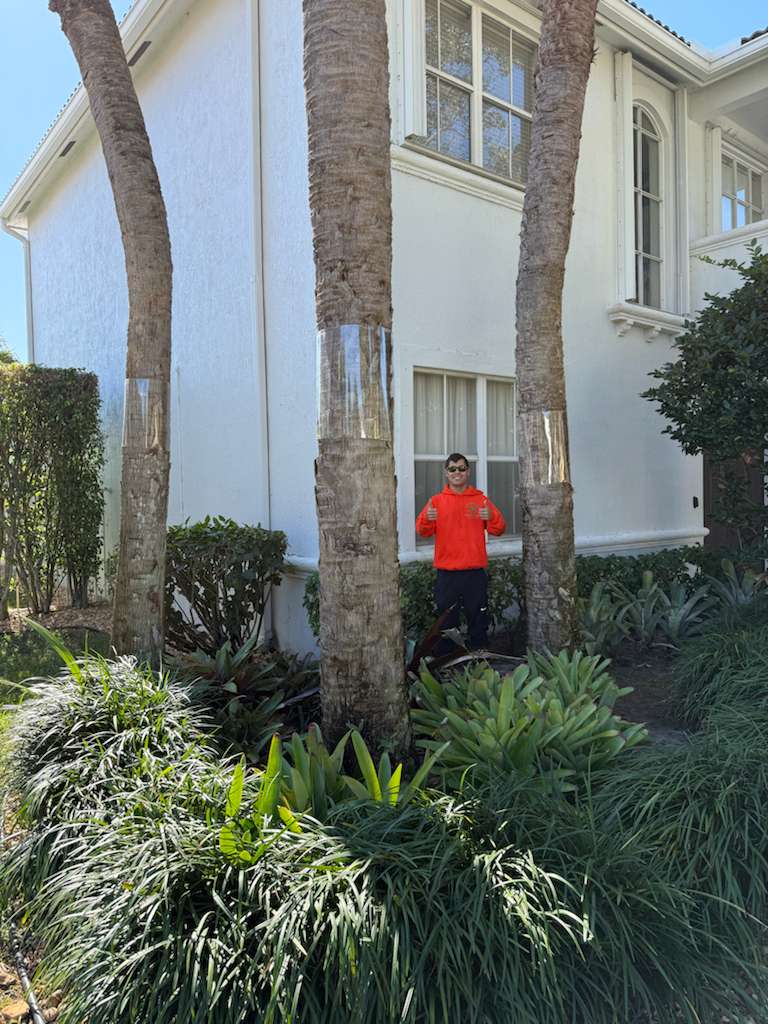
- Keep trunks that reach the roof, canopy, or dock wrapped with smooth guards.
- Firm up or edge soft mulch beds against the seawall and foundation where they'd dig.
- Pull climbing vines off walls, screens, and fences that give an easy vertical.
Make it part of the routine, not a project
The beauty of the landscaping angle is that most of it folds into normal yard care. Your landscaper is already trimming, thinning, and cleaning up — pointing that work at iguana logic costs little extra. The trap to avoid is treating it as a one-time overhaul; overgrowth returns, fruit keeps dropping, and limbs grow back over the roof.
A seasonal pass with iguana-awareness — cut the limbs back, re-thin the waterline beds, confirm the wraps are snug, clear the fallen fruit — keeps the yard off their radar. On a pressured waterfront it's one layer alongside removal and burrow work; on a quieter lot it might be most of what you need.
Questions we hear
Can landscaping alone keep iguanas away?
On a lightly pressured lot, a smarter plant palette plus trimmed cover and wrapped climbs can be most of what you need. On a heavy waterfront it's one layer — it makes the yard less appealing but won't clear a colony already denned in your bank. There it pairs with removal and burrow collapse.
Does trimming really make a difference?
It does. Iguanas like dense, tangled cover to hide and shelter in and overhanging limbs as bridges to the roof. Opening up the beds along the bank and cutting limbs back off the roof removes hiding spots and easy routes, and makes the yard feel exposed — which iguanas dislike.
Will my landscaper handle this or do I need a separate service?
Most of it — trimming, thinning, cleaning up fruit, edging mulch beds — is normal yard care pointed at iguana logic, so a good landscaper can bake it in. The specialized pieces, like sizing tree wraps, collapsing burrows, and removing residents, are where we come in alongside them.
Services in this guide