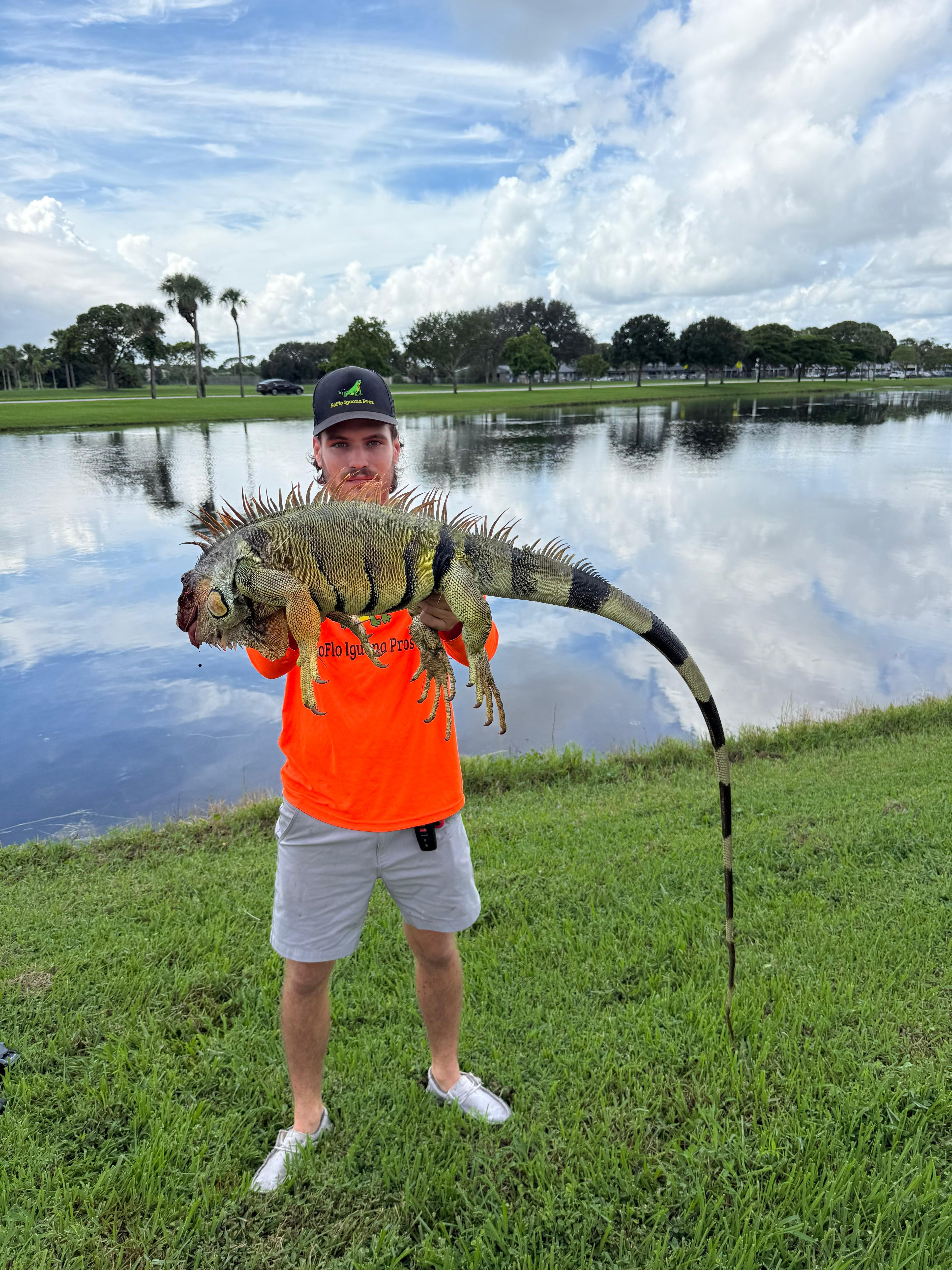

It's the most common frustration I hear: 'we cleared them and they're back.' There are three honest reasons, and none of them mean the removal failed — they mean the property is still doing what drew iguanas in the first place.
The three reasons
Almost every 'they came back' call traces to one or more of these:
- Water supply — a canal, lake, or Intracoastal frontage refills the lot from next door within weeks; a seawall is a highway, not a fence
- Uncollapsed burrows — one female's clutch is dozens of eggs, so an intact nesting burrow refills the property with hatchlings on its own
- Food and cover left in place — the hibiscus, the fruit tree, the dense beds against the foundation are still an open invitation
What actually makes it last
Lasting results come from combining removal with burrow collapse and cutting food and access — you have to remove the animals and the reasons they were there. That's why waterfront properties usually need an ongoing cadence rather than a single clear-out: the water keeps pushing new animals across the line, so the job becomes holding the number down, not hitting zero once.
Removal absolutely works. What doesn't work is expecting a one-time clear-out to permanently fix a property that keeps getting resupplied — from the water, from its own burrows, or from a yard that's still a buffet.
Common questions
How do I stop iguanas from coming back?
Combine removal with collapsing the burrows and cutting the food and cover that drew them — removing the animals alone isn't enough. On the water, an ongoing cadence keeps holding the numbers down against the resupply.
Does that mean removal doesn't work?
No — removal works, but a one-time clear-out doesn't fix a property that keeps getting resupplied from the water or from its own uncollapsed burrows. That's exactly what the burrow work and the follow-up cadence address.
If they'll come back anyway, why remove them at all?
Because doing nothing lets a couple of animals become a colony and the burrows keep undermining your seawall. Removal plus burrow collapse and habitat changes gets and keeps the number low; on the water, an ongoing program holds that line. It's control, not a one-time cure — and control is the realistic goal on a canal.