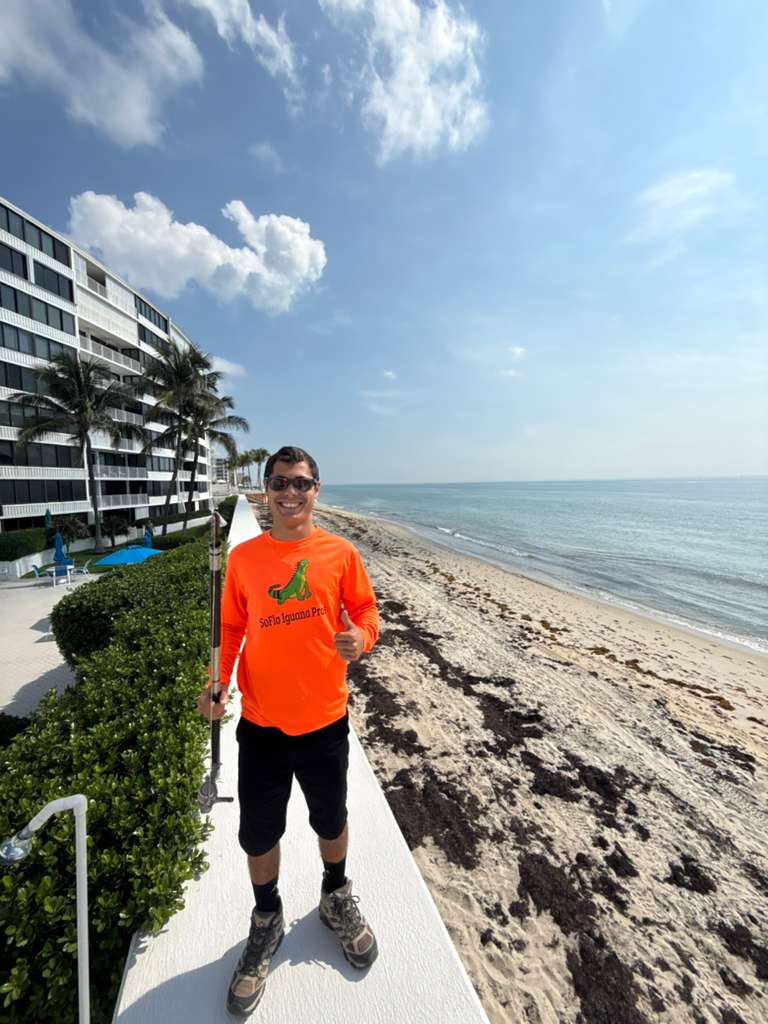

HOAs and condo associations in Palm Beach County face iguanas at scale, because the retention lakes, canal banks, clubhouse landscaping, and pool decks are all one connected habitat. Treating a single unit while the community lake next door is full of iguanas doesn't hold — the animals just walk back over from the shared banks within days. Prevention that works has to be planned at the community level, not address by address.
A community program starts by mapping the hotspots — lake banks, common-area beds, amenity decks — then combines removal, burrow collapse and backfill along the banks, barriers where they actually matter, and regularly scheduled monitoring. That steady, property-wide pressure keeps the population down across the whole community instead of chasing complaints one unit at a time while the source population keeps replenishing.
Why unit-by-unit doesn't work
The core issue for a community is that iguanas don't respect property lines. The breeding population usually lives on the shared banks and in the common-area landscaping, so any single treated unit is just re-invaded from the commons.
- Retention lakes and canal banks are the shared breeding ground
- Common-area beds and amenity landscaping feed the whole population
- Animals move freely between units and commons across the property
- One treated unit is quickly re-colonized from the untreated commons
What a community program covers
A good HOA program is built around the shared habitat first. That means concentrating on the lake and canal banks where the animals breed and den, cleaning up the food in common-area landscaping, adding barriers at genuine problem spots like clubhouse pool cages, and setting a monitoring cadence so the crew stays ahead of the breeding cycle. Problem units are folded into the same coordinated plan rather than treated as separate one-offs.
Common questions
Can the HOA just handle the common areas and leave units to owners?
Common areas are the right place to start, since the lakes and banks are the breeding ground, and doing them well helps every unit. But a coordinated approach that also folds in the worst problem units works far better than a patchwork of the association doing one thing and owners doing another.
How is an HOA billed for this?
Community programs are usually scoped and priced for the whole property on a scheduled basis rather than per call. The specifics depend on the size of the community and the severity of the pressure, which we assess on a walkthrough before quoting a program.
Will residents see fewer iguanas quickly?
There's usually a noticeable drop after the first coordinated clear-out and bank burrow work, but the lasting result comes from the ongoing monitoring that keeps the shared banks from re-populating. A single big push without follow-up tends to rebound because the lakes keep producing new animals.