
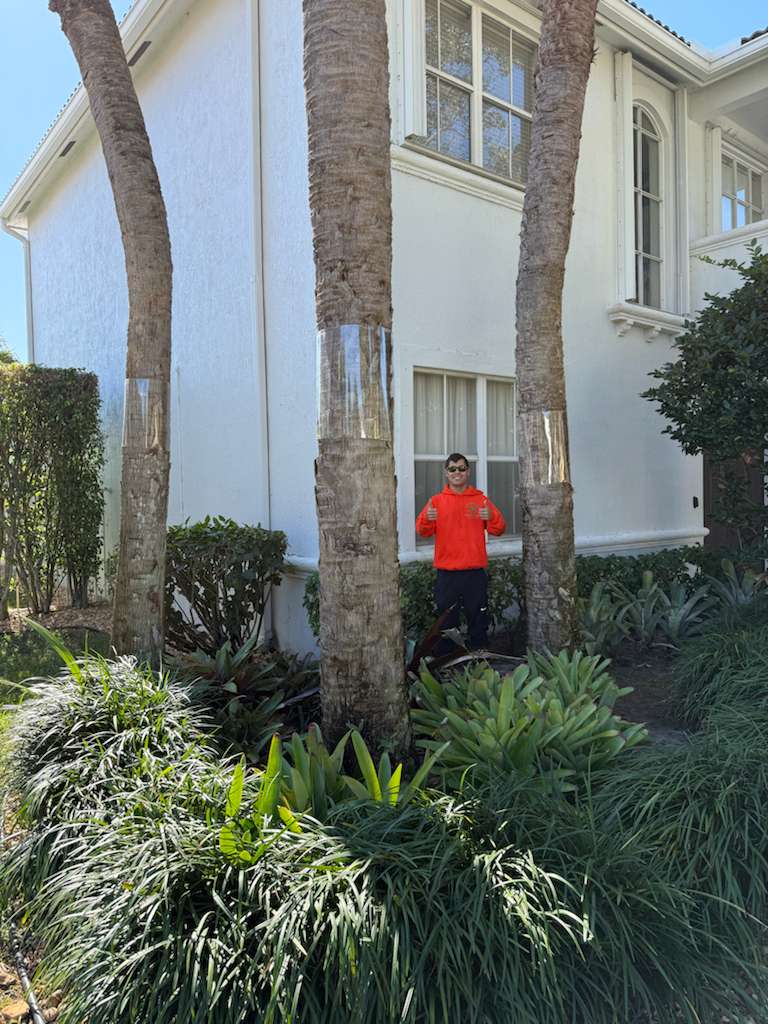
Iguana pressure isn't flat across the year, so prevention maintenance follows the calendar rather than being a random check-in. The pivotal season is spring, when females dig nest burrows and lay clutches. Get ahead of that and you stop a handful of iguanas from becoming a colony; miss it and you're chasing hatchlings all summer. That single window drives most of the value in a seasonal program.
A seasonal visit typically means walking the property for new burrows and backfilling them, checking that tree wraps, piling guards, and screen guards are still intact and correctly positioned, trimming back branches that have grown into new access routes, and clearing fresh food sources. It's light, routine work that keeps the earlier investment doing its job rather than quietly eroding between visits.
What a seasonal visit covers
The checklist is straightforward, and most of it is about catching small problems before they compound over a season.
- Walk the property for new burrows and backfill them
- Confirm wraps, guards, and screen guards are intact and positioned right
- Trim branches that have grown into new access or launch points
- Clear fresh windfall and other new food sources
- Note any re-colonization pressure before it becomes a colony
Why spring is the high-leverage window
Collapsing nest burrows before clutches hatch is the single highest-leverage seasonal task there is. One missed nest can add dozens of hatchlings to a property in a few weeks, turning a manageable situation into a summer-long problem. Timing the maintenance ahead of and during nesting is what separates staying ahead of the population from perpetually reacting to it.
Common questions
When's the most important time for maintenance?
Ahead of and during spring nesting. Collapsing nest burrows before clutches hatch is the single highest-leverage seasonal task there is — one missed nest can add dozens of hatchlings in a matter of weeks, which is exactly how a small problem becomes a colony.
How often should maintenance happen?
It depends on pressure. Heavy waterfront often warrants a regular monitoring cadence through the year, while lighter inland lots may only need a seasonal check-in timed around nesting. We match the schedule to the property rather than applying one calendar to everyone.
Can I do the seasonal checks myself?
You can handle the easy parts — clearing windfall, eyeballing that a wrap looks intact. The parts that need experience are reading and safely backfilling new burrows (confirming they're empty, checking for active nests) and judging whether a barrier has developed a new bypass. Those are where a trained eye earns its keep.