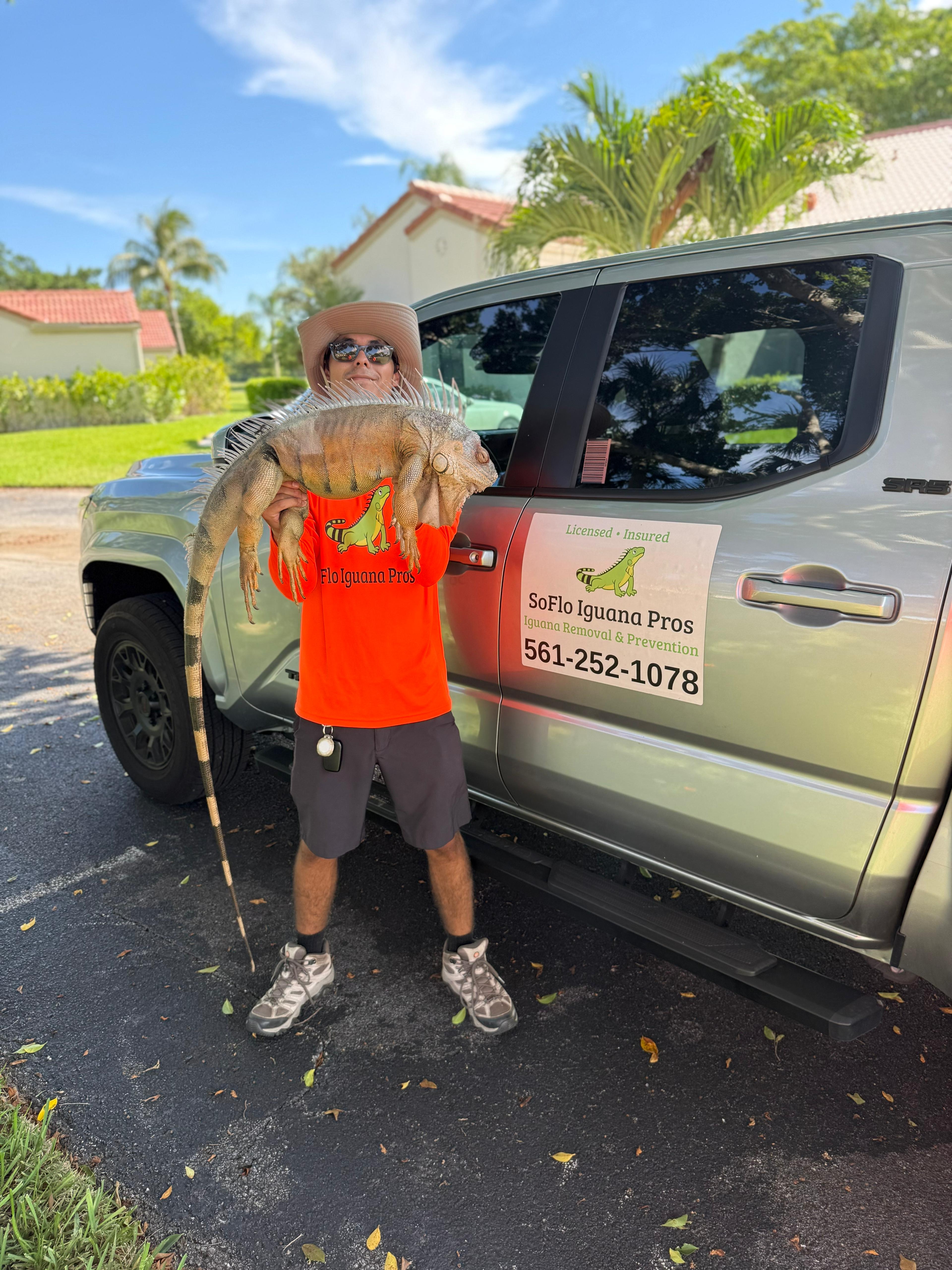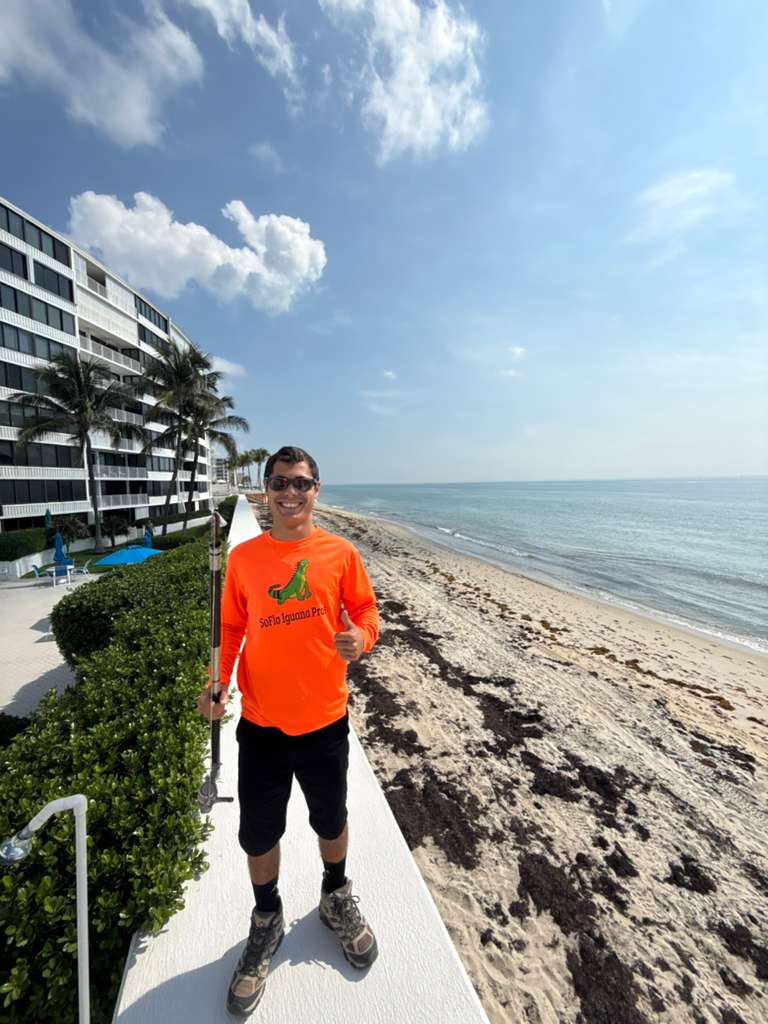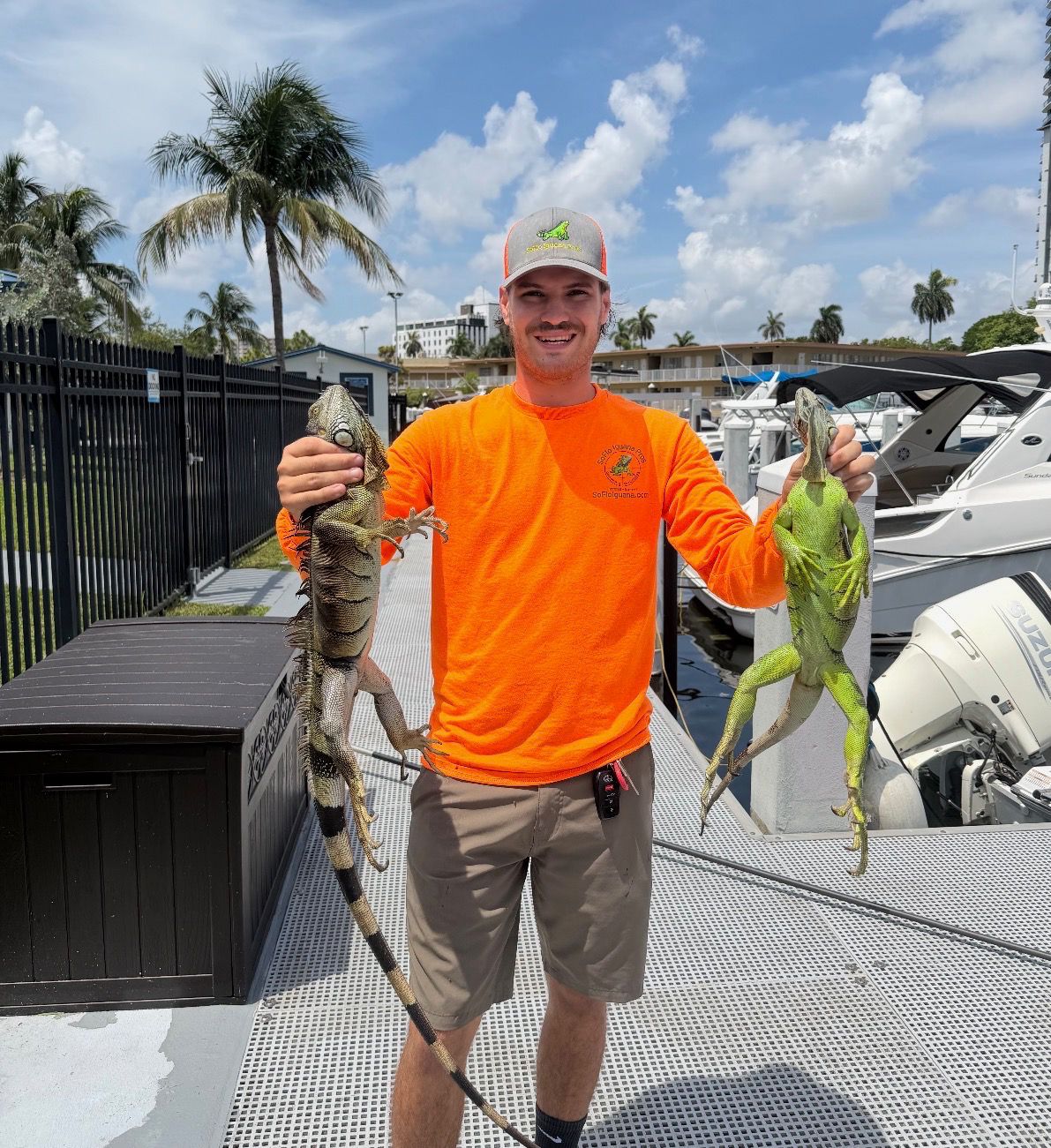

The problem is spread across shared property
For an HOA the iguana problem is magnified because it's spread across shared property that the association maintains and insures. What starts as a nuisance at one building becomes a community-wide line item touching lakes, walkways, amenities, and turf all at once.
The common damage falls into a few recurring buckets that boards and managers across Palm Beach County see season after season.
- Community lake banks honeycombed with burrows, slumping and eroding
- Sidewalks, cart paths, and pool decks settling and cracking over voids
- Droppings fouling pool areas, spas, clubhouses, and cabanas
- Soft spots and small sinkholes creating trip hazards in maintained turf
Liability, not just repair cost
The liability angle matters as much as the repair bill. A raised sidewalk lip or a soft spot on a common walkway is a trip-and-fall waiting to happen, and salmonella-carrying droppings around a community pool are a health risk — both are exposures a board is obligated to manage, not just eyesores to schedule around.
That's why associations increasingly treat iguana management as risk management rather than a discretionary landscaping expense.
Why one-off calls don't hold
Iguanas move freely across a community's interconnected lakes, banks, and greenbelts, so a single removal at one building simply gets backfilled from next door within weeks. Spot-treating the loudest complaint chases the animals around the property rather than reducing them.
Why a program beats scattered service
Community-wide, monitored management — sustained removal, burrow collapse, and nesting-season attention across the whole property — is what actually keeps the numbers, and therefore the recurring repair and liability costs, down. It's the difference between paying to regrade the same bank every year and paying once for it to hold.
Common questions
What's the biggest iguana cost for an HOA?
Usually the lake banks and hardscape — repeatedly regrading burrowed banks and repairing settled sidewalks, cart paths, and pool decks — plus the liability of trip hazards and salmonella-carrying droppings around shared amenities.
Why do individual removals not work for a community?
Iguanas travel freely across a community's shared lakes, banks, and greenbelts, so clearing one building just draws replacements from adjacent areas. Only community-wide management actually reduces the overall population.
Is iguana management a risk issue or a landscaping issue?
Increasingly a risk issue. Trip hazards on common walkways and salmonella-carrying droppings around a pool are liability exposures a board must manage, so many associations treat iguana control as risk management rather than optional landscaping.