
Mild winters, occasional snaps
Palm Beach County winters are mild — most days stay well up in comfortable territory, which is a big part of why iguanas thrive here. The occasional cold front can push overnight lows into the 40s°F, and a rare hard snap can dip colder.
Because iguanas are cold-blooded, temperatures roughly in the 40s and below for a stretch make them sluggish and can leave them 'cold-stunned,' losing their grip and dropping from trees. It's a genuine local phenomenon that shows up in the news every few winters.
Two things worth knowing
The cold-stun images make the rounds every winter, but they're widely misunderstood in two ways.
- A cold-stunned iguana usually isn't dead — most revive as it warms
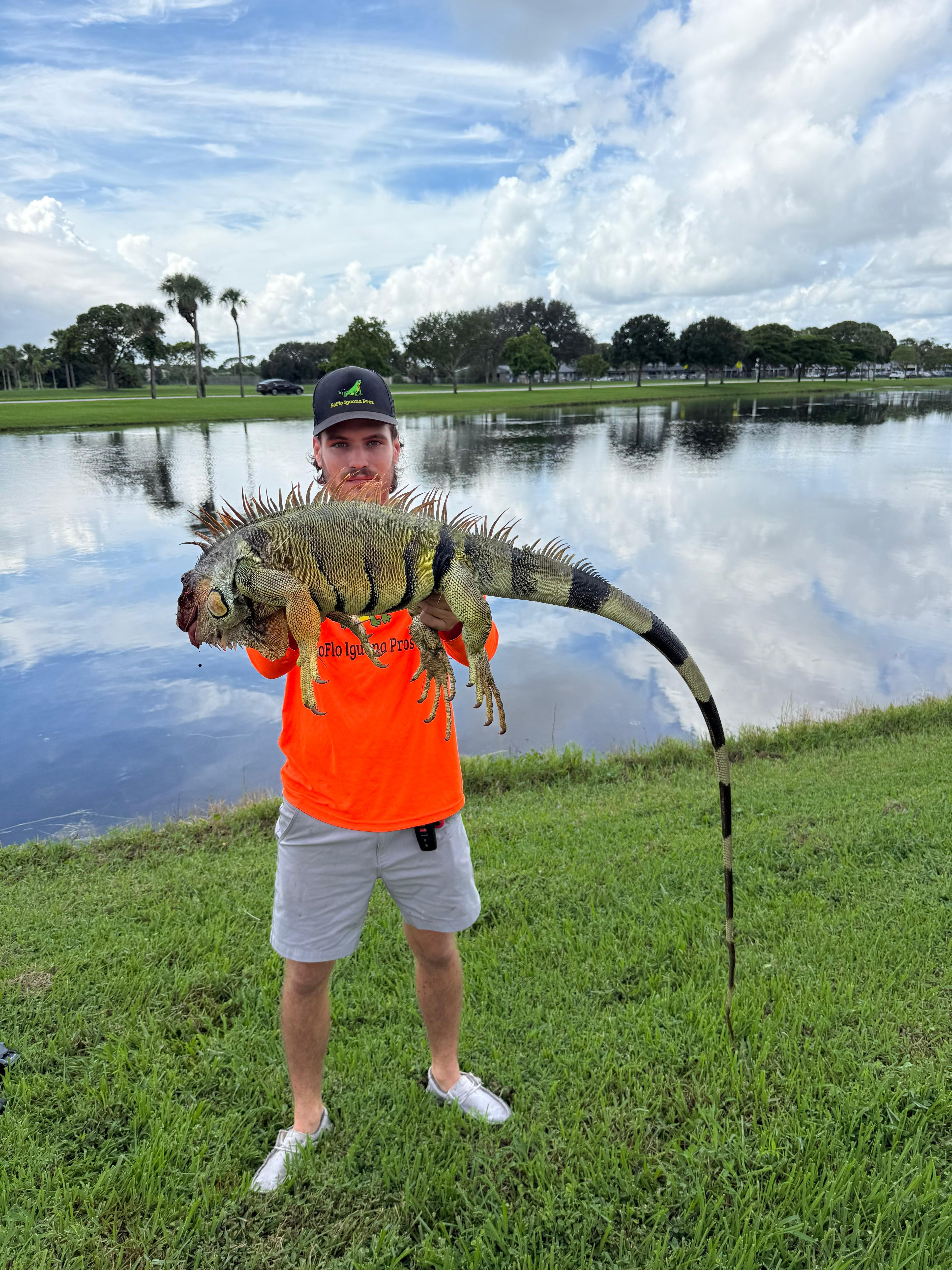
- A big one on the ground can still bite and thrash; don't grab it bare-handed
- Cold snaps set numbers back for a season at most
- The county never gets cold enough, often enough, to control the population
Not a control strategy
Cold snaps aren't a control strategy. They can knock the local population back for a season, but the county simply doesn't get cold enough, often enough, or long enough to keep numbers down. Survivors return with the warmth, which is why removal and prevention still do the real work here. If you find a cold-stunned iguana on your property, the safe move is to leave it alone and call us rather than handling it yourself.
Common questions
Is a cold-stunned iguana dead?
Usually not. Cold-stun is temporary — most iguanas warm up and move off as the temperature rises, so they're not safe to grab bare-handed even when they look lifeless.
Will a cold snap solve my iguana problem?
Only briefly. Palm Beach County doesn't get cold enough for long enough to control them, so survivors return with the warmth. Removal and prevention still do the real work.
It got cold and iguanas fell from my trees — what do I do?
Leave them where they are and call us. A stunned iguana can revive and bite, and a big one is heavy and awkward to move safely.