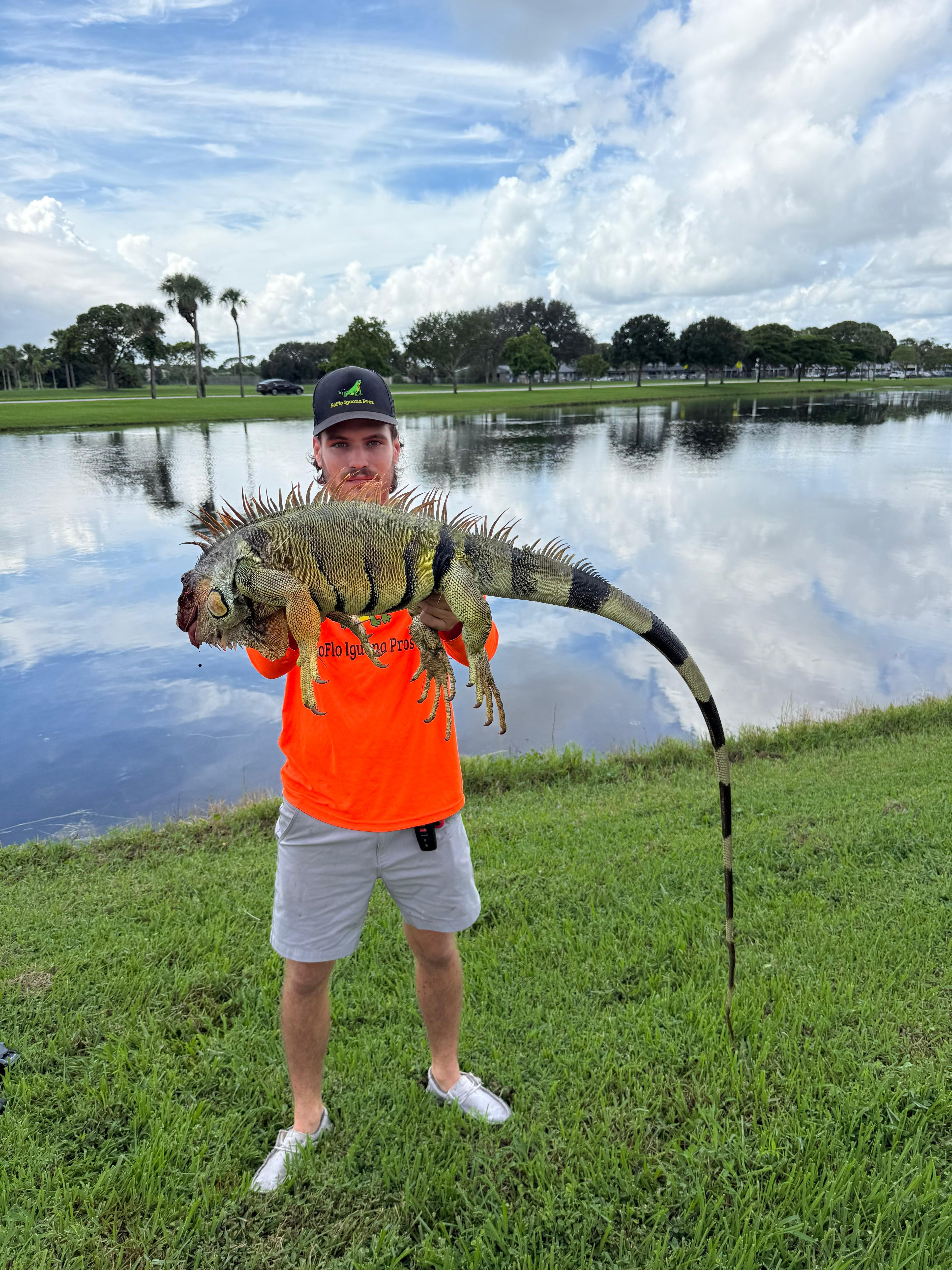

I'll give you the straight answer most product labels won't: repellent sprays and granules don't solve an iguana problem. Some can make a specific plant or surface less appealing for a little while, and a strong scent might move an animal off one spot for a day. But there's no spray that clears a colony or keeps iguanas off a waterfront lot, and any that claims to is overselling.
Why the bottle doesn't win
The reason is simple — a hungry iguana with a canal bank to den in and a yard full of hibiscus isn't going to be talked out of it by a smell. Everything about our environment works against the product:
- Rain washes it off, and we get a lot of rain
- The Florida sun breaks it down fast
- The animal habituates — the smell stops meaning anything
- It never removes the food, cover, or burrows that drew them in
Where to spend instead
What actually changes the picture is removing the animals, collapsing the burrows, and taking away food and access. That's behavior change the iguana can't ignore — you're removing the animal and the reasons it was there. A spray asks the iguana to volunteer to leave a place it likes; removal and exclusion don't ask, they change the property. Spend your money there, not on a bottle.
Common questions
Is there any repellent worth trying?
Not as a real fix — at best a spray briefly protects one prized plant, and even that wears off with rain and sun. It won't clear or exclude iguanas from a property, so I don't recommend leaning on it.
What works instead of repellent?
Removal, burrow collapse, and physical exclusion like tree wraps and piling guards, plus cutting back food and cover. Those change the property in ways the animal can't ignore; a smell doesn't.
The label says it repels iguanas — is that false?
It's overselling. A product might genuinely make one plant less tasty for a short while, which is technically 'repelling,' but that's a long way from clearing a lot or keeping them off it. The label's claim and what solves your problem aren't the same thing.