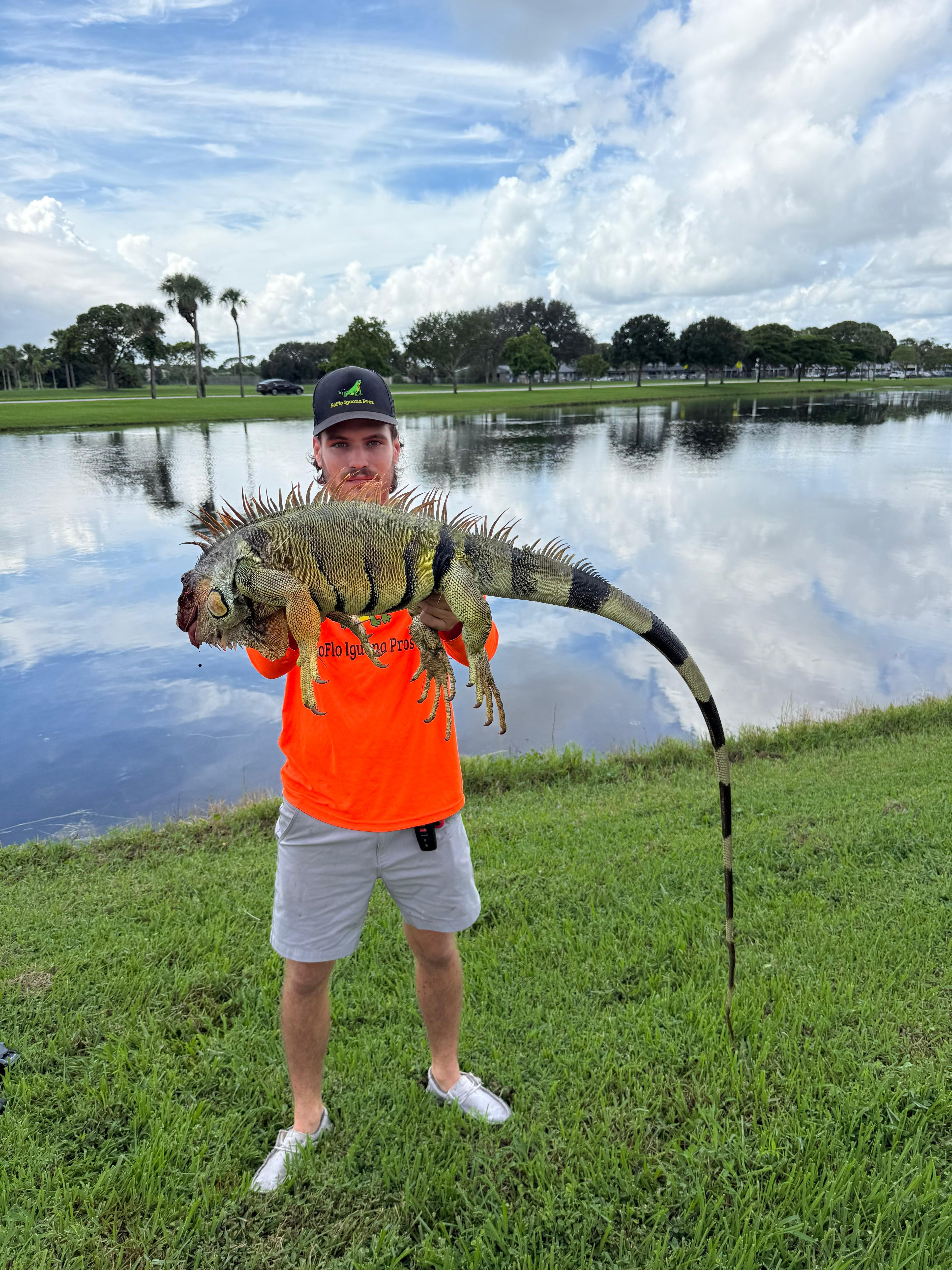
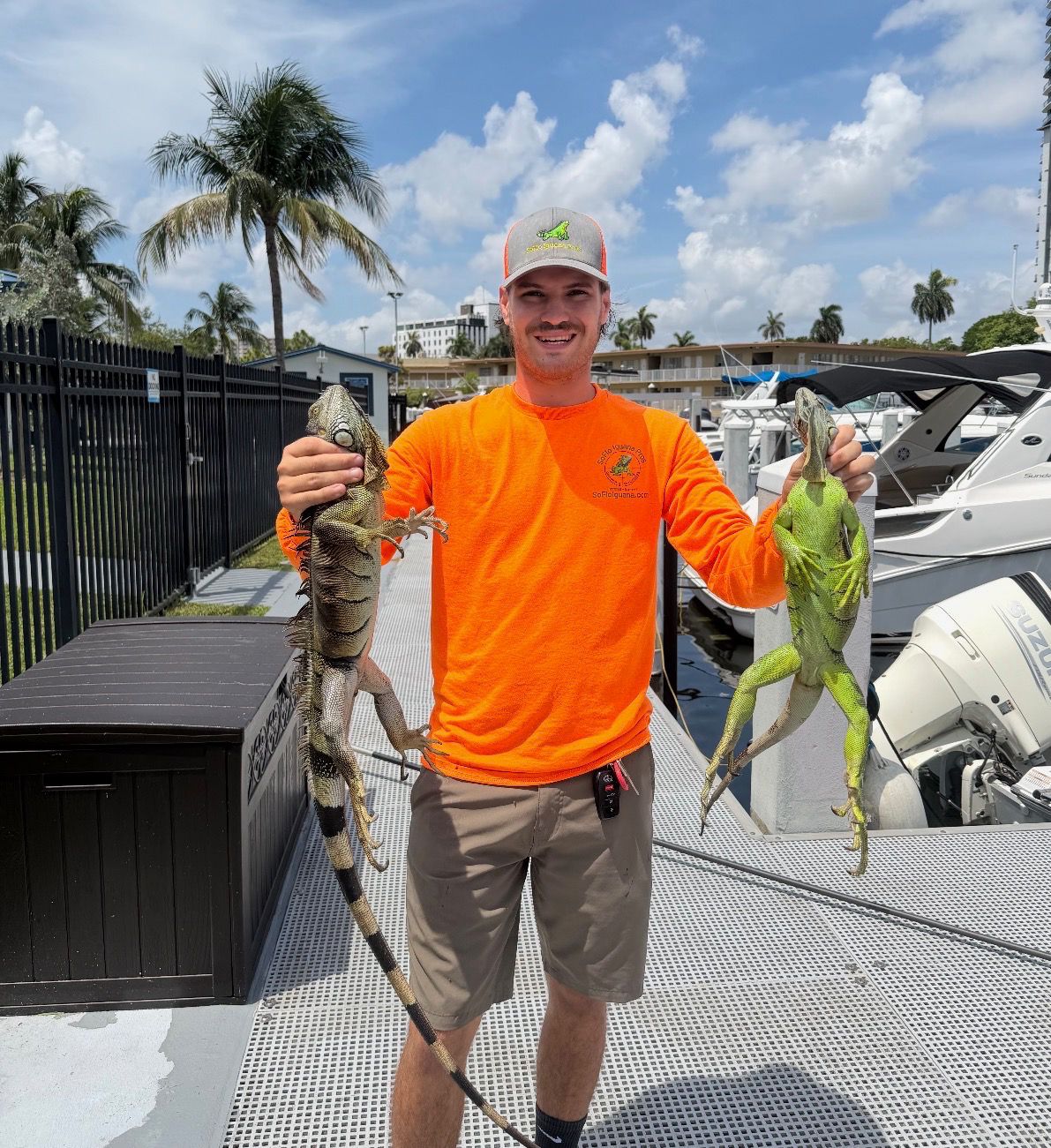
Dead iguanas are a real and unpleasant part of this in South Florida. They turn up floating in pools, on pool decks, along seawalls, and in the yard — and after a hard cold snap you can get several at once when cold-stunned animals don't recover. In the Florida heat a carcass goes bad fast, and it draws flies and smell within a day.
Why it's not a bare-hands job
It matters to do this properly. Iguana droppings and carcasses can carry salmonella and other bacteria, so this isn't a grab-it-and-toss-it situation:
- Gloves and proper bagging, not bare hands
- Cleaning the pool deck, dock, or patio underneath, not just picking up the animal
- Lawful, sanitary disposal rather than the household trash
- Prompt handling before the Florida heat makes it worse
Cold snaps and the sudden pile-up
The odd carcass shows up year-round, but the volume calls come after a cold morning. When temperatures drop into the 40s, iguanas go dormant and lose their grip — the 'raining iguanas' you hear about — and not all of them recover. A single cold night can leave several dead around a waterfront lot at once, all needing prompt, sanitary removal before the smell and flies set in.
Common questions
Why are there dead iguanas after a cold snap?
Cold-stunned iguanas that drop from trees don't all recover, so a hard cold morning can leave several dead around a property. They need prompt, sanitary removal before the heat and flies take over.
Can I just throw a dead iguana in the trash?
It's better handled with gloves, bagging, and a cleanup of the surface underneath, since carcasses and droppings can carry salmonella. That's why people call rather than do it bare-handed with a garbage can.
There's one floating in my pool — is the water safe?
Get the carcass out and don't swim until the pool's been handled — a dead animal and its droppings can introduce bacteria. Removal plus cleaning the deck and skimming the pool is the sanitary way to deal with it.