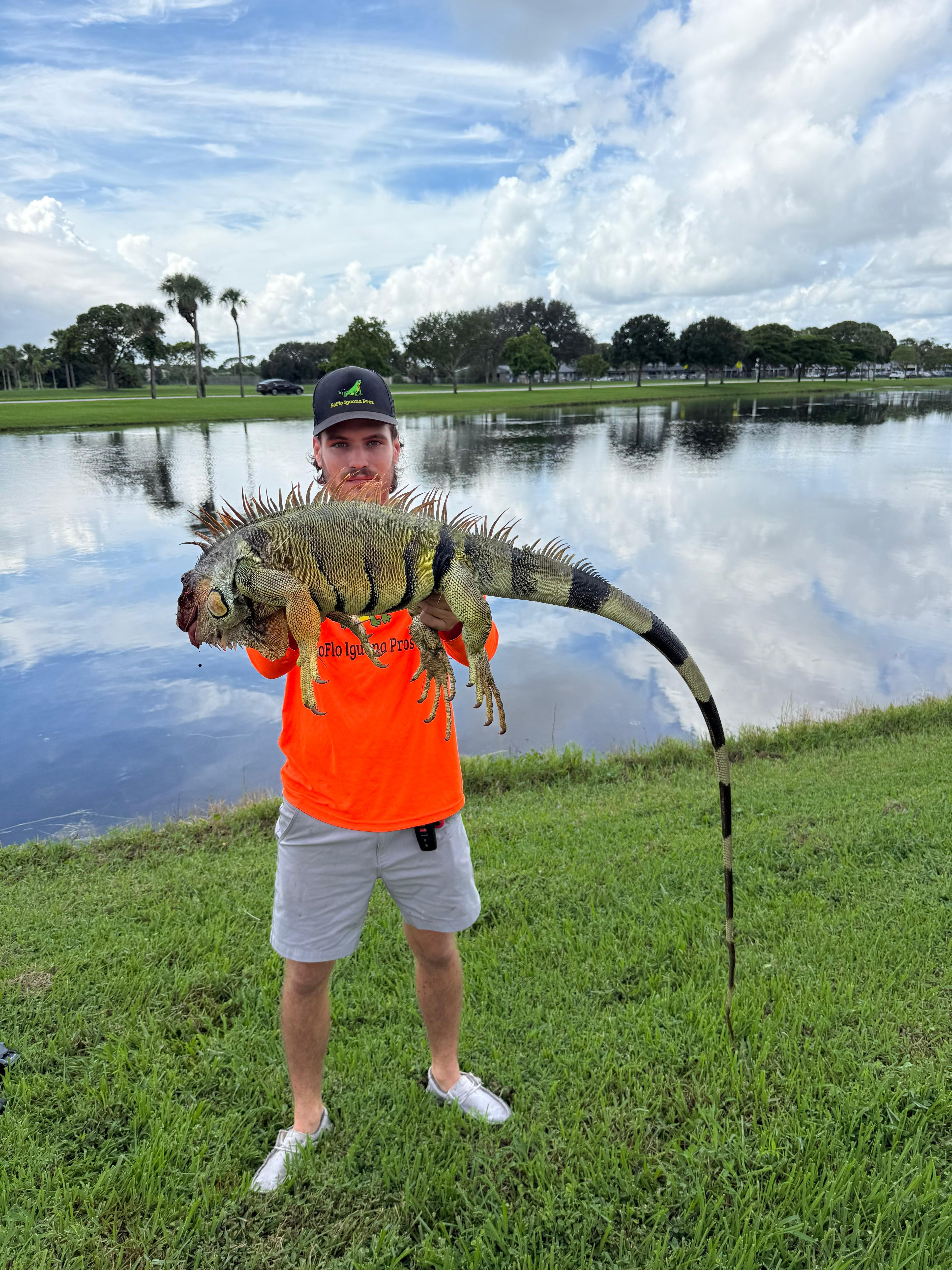
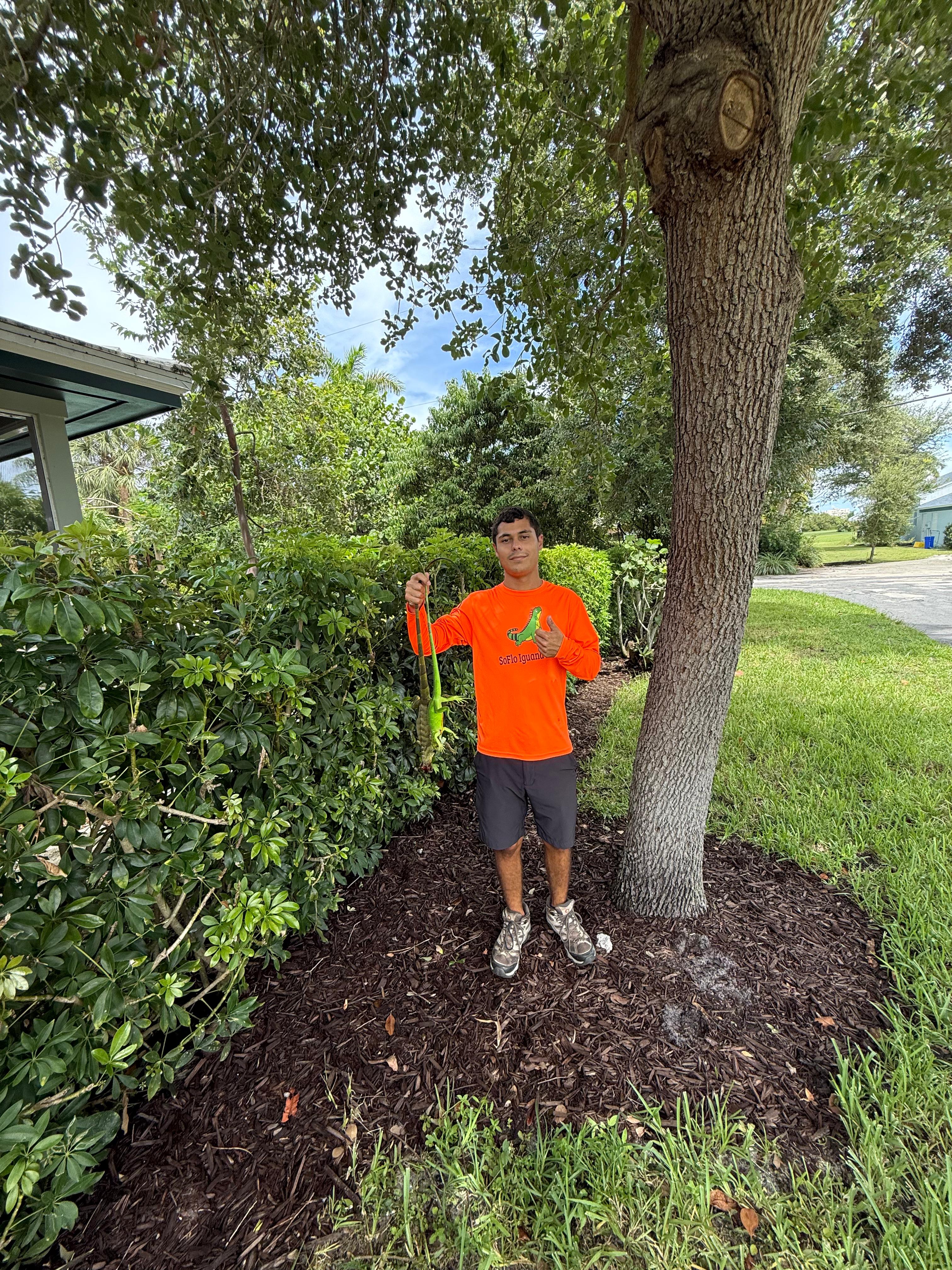
For an HOA the problem isn't one iguana on one lot — it's a whole community's worth of retention lakes, canal frontage, clubhouse pool decks, and common-area landscaping, all producing and harboring iguanas at once. Handling that as scattered one-off calls doesn't work, because the animals travel between the lake, the seawall, and residents' yards freely.
What a community-wide program looks like
What fits is a scheduled program that treats the community as one connected habitat rather than a list of addresses:
- A set visit cadence working the lake shorelines and seawalls
- Steady burrow collapse across the common areas
- Coordination so residents know the work is happening
- Reporting for the board on what's being done and where
The board's angle: records and liability
Boards tend to want documentation, and reporting on what's being done and where fits naturally into a program — it's what associations need for their records and for answering residents. There's also a sanitation angle worth knowing: iguana droppings on shared pool decks and walkways are a liability the association carries, which is part of why staying ahead matters. Waiting for complaints means the population has already rebuilt, and the droppings are already on the amenities residents pay for.
Common questions
Can an HOA just call when someone complains?
It can, but one-off calls don't hold a community where lakes and seawalls keep supplying iguanas across every lot. A scheduled community-wide program is what actually keeps numbers down instead of chasing complaints.
Do you provide documentation for the board?
Reporting on what's done and where fits naturally into a program, which is what boards usually want for records and residents. That's a normal part of a community relationship, not an extra.
Whose responsibility is it — the HOA or the homeowner?
Common areas like lakes, seawalls, and clubhouse decks are the association's, and that's usually where the pressure originates. Individual lots may be the homeowner's, but because the animals travel freely between them, a community-wide program on the common areas is what protects everyone's yards too.