
Backyard fruit trees are a favorite
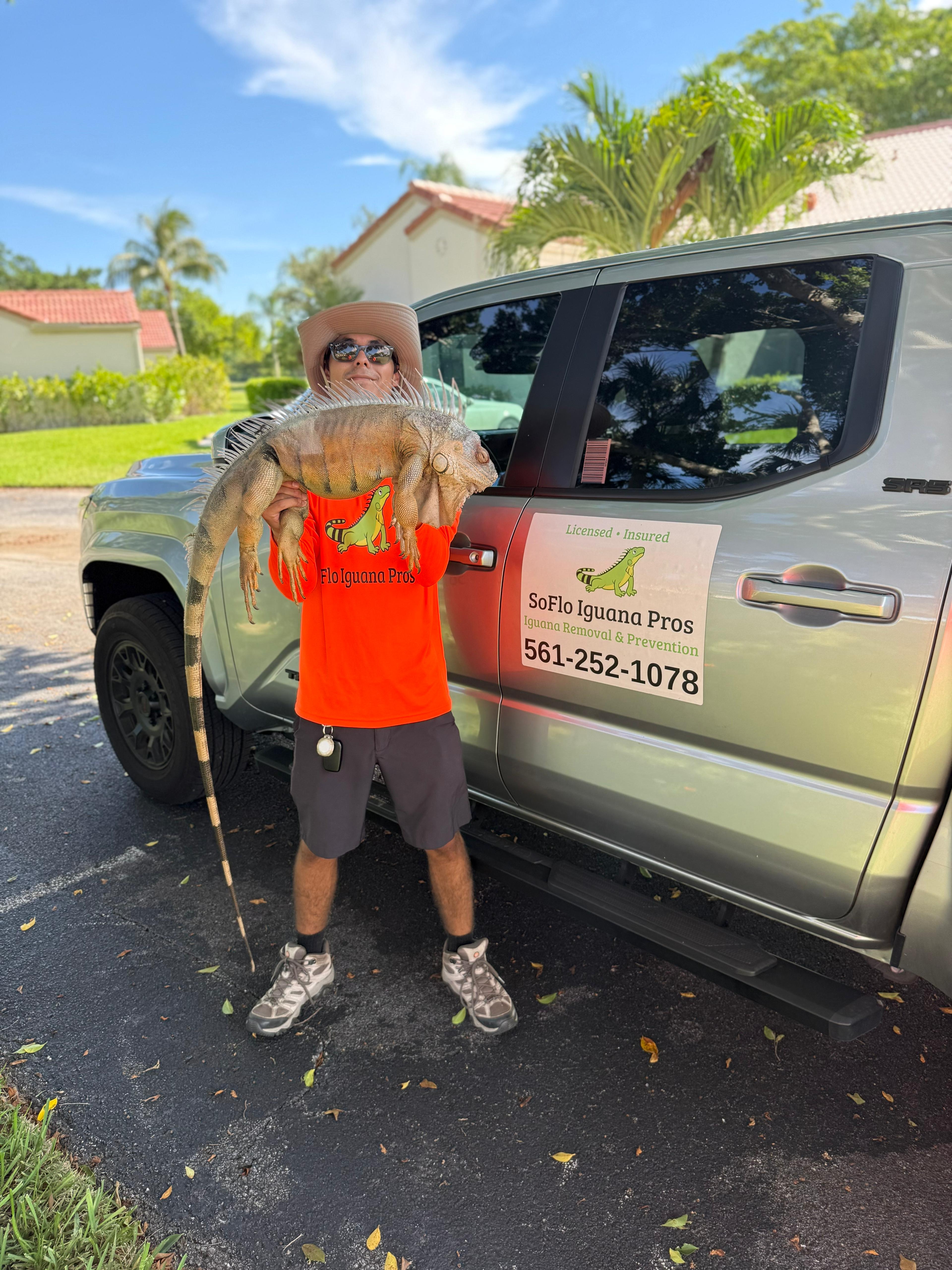
South Florida backyard fruit trees are exactly the kind of target iguanas seek out. They're excellent climbers and will go straight up a mango, papaya, banana, or citrus tree to eat the blossoms, the developing fruit, and the soft new leaves. To an iguana a fruiting tree is both a food source and a comfortable, elevated basking perch.
Because they hit the flowers and young fruit specifically, the damage often shows up as a poor or missing harvest rather than obviously chewed-up branches — the tree can look reasonably healthy while producing almost nothing.
The tree becomes a hub of activity
A fruit tree doesn't just feed iguanas; it concentrates their activity. It doubles as a basking spot and, if it's near the house, a highway onto the roof, balconies, and screen cages. So a productive mango or citrus tree close to the home can become the center of the iguana pressure on the whole property.
What owners lose
- Blossoms eaten before they can set fruit
- Young fruit stripped before it matures
- Tender new leaves and growth tips browsed back
- A healthy-looking tree yielding little to no harvest
Protecting the harvest
Owners who want their fruit usually pair a physical climbing barrier with removing the resident animals. A smooth trunk wrap or guard tall enough that a large iguana can't reach or climb over it blocks the route up, while removal reduces how many animals are working the tree in the first place. Netting a whole tree tends to be awkward and temporary by comparison, and it does nothing about the population still living on the property.
Common questions
Why is my fruit tree producing nothing?
If iguanas are grazing the blossoms and young fruit, the tree can look healthy but yield almost nothing, because they eat the crop before it matures. A poor or missing harvest with no obvious disease is a common iguana sign.
How do I protect a fruit tree from iguanas?
A smooth trunk wrap or guard tall enough that a big iguana can't reach over it, combined with removing the resident animals, is the durable approach. Netting alone tends to be awkward and only temporary.
Which fruit trees do iguanas target most?
Mango, papaya, banana, and citrus are common favorites in South Florida yards, since they offer soft blossoms, tender fruit, and easy climbing — but iguanas will work almost any fruiting tree they can reach.