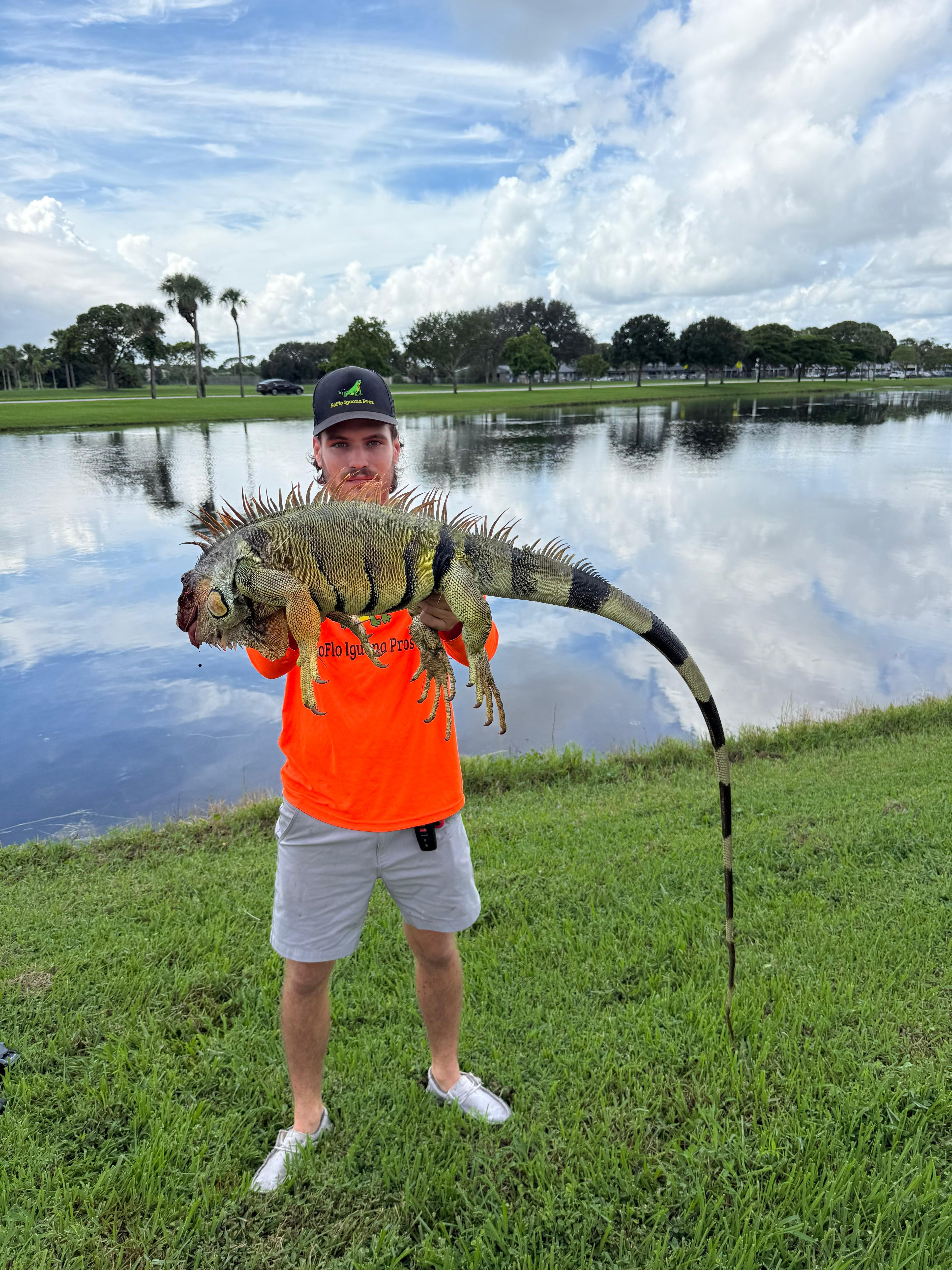

There are two honest ways to catch an iguana: get to it directly, or let a trap do it. Direct capture means a catch-pole or a long-handled net, usually working an animal that's cornered against a wall, cage, or the water's edge. Trapping means putting a cage on its route and checking it. On most jobs I use both.
What people underestimate is the fight. A full-grown iguana has a serious bite, sharp claws, and a tail it whips like a whip — a big male in breeding season is no joke. That's why I glove up and control the head and tail, and it's the main reason I'd steer a homeowner away from grabbing a large one bare-handed.
Direct capture, step by step
When I'm taking one by hand, the sequence is about control and cutting off the escape to water:
- Approach from the side or behind, slowly — they bolt at movement head-on
- Cut off the route to the canal or a burrow first
- Corner it against a wall, cage, or hard edge
- Control the head and the tail together with a pole or gloved grip
- Keep the claws and tail away from your face and arms
When to let a trap do it
If the animal keeps diving into the canal, lives in a burrow you can't reach, or only shows when you're not around, chasing it is a losing game. That's exactly what a live-catch trap on its route is for — it works the line while you're not there and catches the ones that vanish the moment you step outside.
Common questions
Can you just grab an iguana?
You can grab a small one carefully, but a large adult will bite, scratch, and tail-whip hard enough to hurt you. Control the head and tail together or use a pole — never reach for a big one with bare hands.
What's the safest way for a homeowner?
Honestly, calling someone who does it daily — but if you must, cornering a small one and using a net beats reaching for a big one by hand. Keep kids and pets clear, and don't chase one toward water where you'll lose it anyway.
Do I need to worry about the tail?
Yes. A big iguana's tail is a real weapon — it whips hard enough to leave a welt, and they'll use it. That's why controlling the tail along with the head is the whole point of a proper grip or a catch-pole.