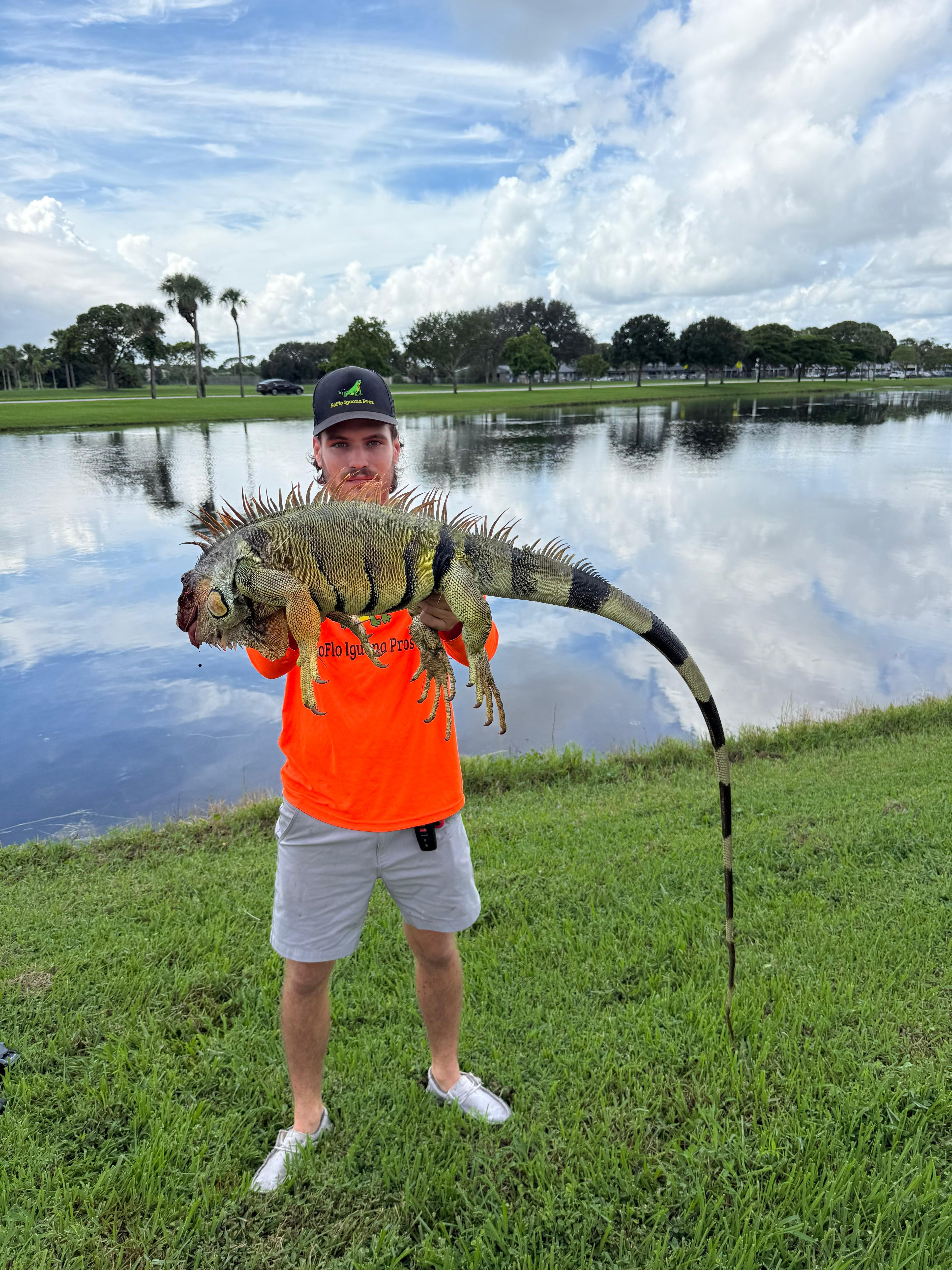

Why kids and iguanas need a plan
Kids and iguanas are a combination worth thinking about, because children are naturally curious and iguanas defend themselves when cornered. The risks fall into two buckets — physical and sanitary — and both are easy to manage once you know they're there.
Large males in breeding season are especially defensive, and a child who chases or grabs one can get hurt when the animal reacts.
The two kinds of risk
It helps to name the risks plainly so kids understand why the rules exist.
- Physical: a startled iguana can bite, scratch with its claws, or deliver a hard tail whip.
- Sanitary: droppings can carry salmonella, and kids play barefoot on decks and lawns.
- Burrows and disturbed nests are worth keeping kids away from too.
Simple family rules
The guidance we give families is short and sticks: teach kids not to touch, feed, chase, or corner iguanas, keep them away from droppings and burrows, and make hand-washing routine after outdoor play. Cleaning droppings off decks and play areas and reducing the population removes the everyday hazard at the source. We're not medical providers — if a child is bitten or scratched, or gets sick after contact, see a doctor. This is general information, not medical advice.
Common questions
Is it dangerous if my kid touched an iguana?
The main concerns are salmonella from droppings and any bite or scratch. Wash hands well with soap and water; for a bite, a scratch that breaks the skin, or any illness afterward, see a doctor. This is general information, not medical advice.
Are iguanas aggressive toward children?
They don't seek kids out — they'd rather flee. But a cornered, chased, or grabbed iguana defends itself with bites, claws, and its tail, and large males are the most defensive. Teaching kids to keep their distance prevents most incidents.
What should I do first if my child is bitten?
As general first aid, control bleeding with clean pressure, wash the wound well with soap and water, and cover it — then see a doctor, since bites carry infection risk and may need a tetanus update. We're a removal company, not a medical provider; this isn't medical advice.