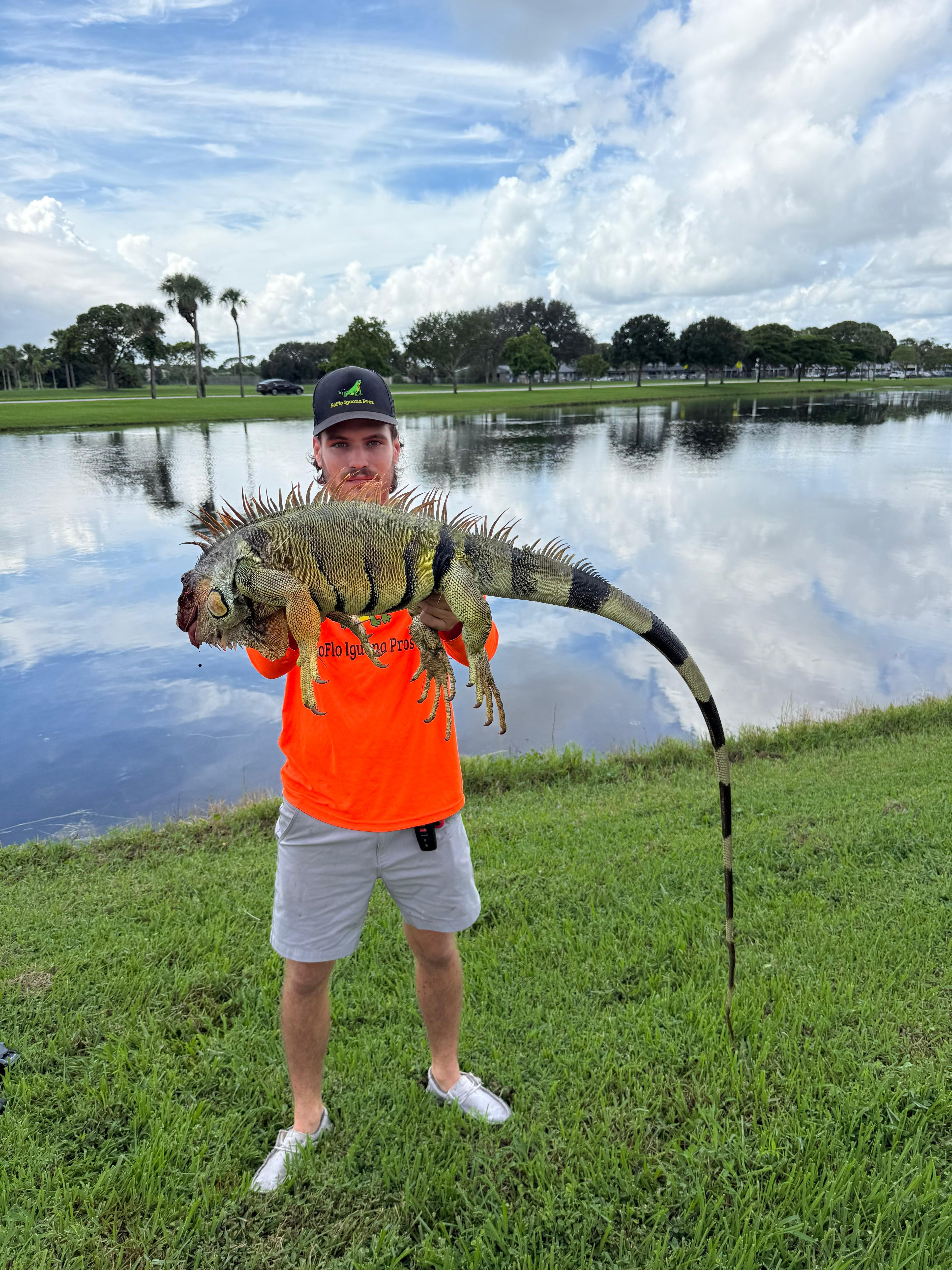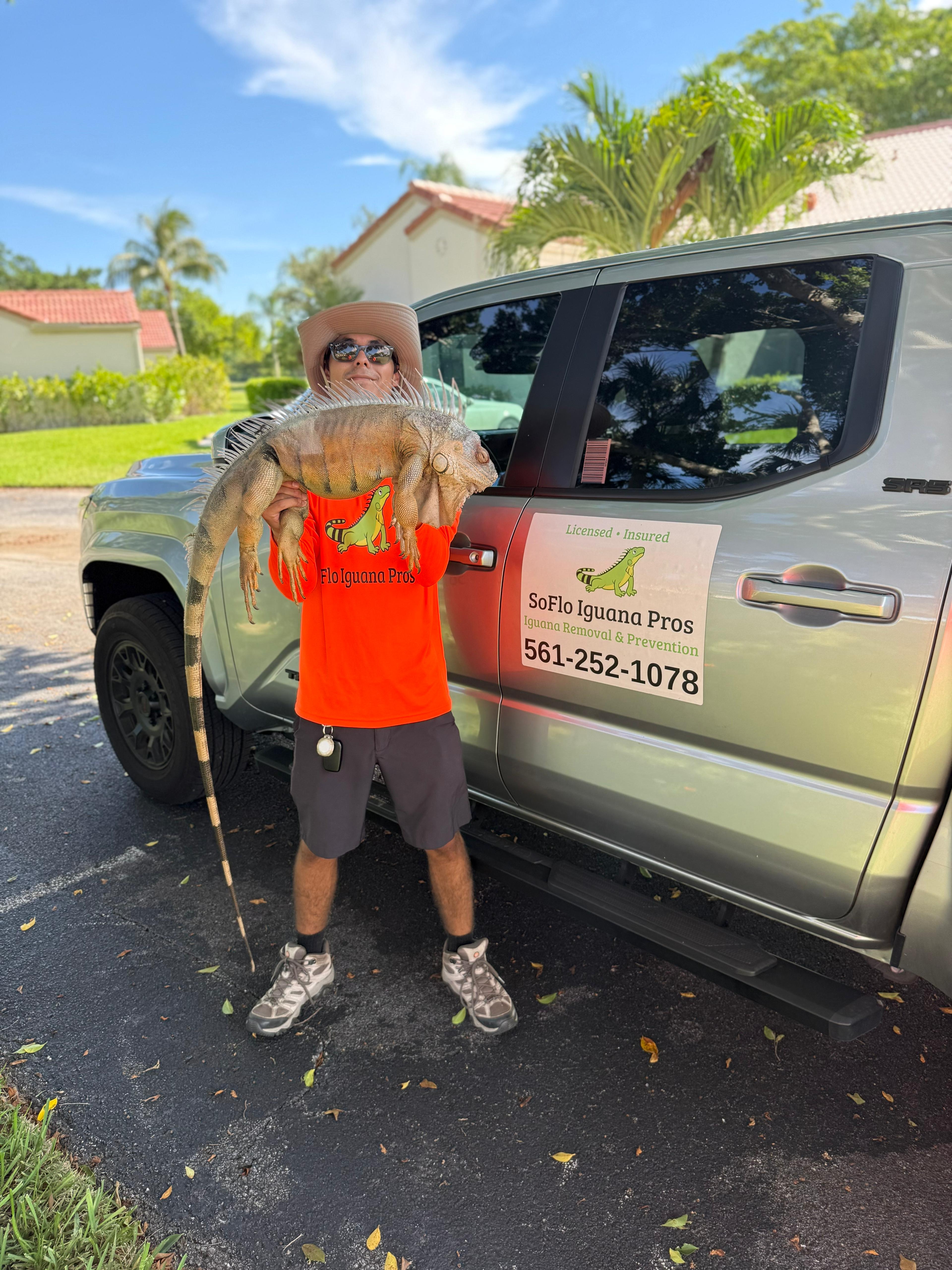

Bunkers, greens, cart paths, and lake banks — iguanas hit a golf course everywhere at once. Here's the damage clubs face and how the cost adds up.
A golf course in Palm Beach County is, from an iguana's point of view, close to paradise — acres of manicured turf, sunny water hazards on nearly every hole, soft bunker sand, and hardly any predators. That's why the courses I've walked in and around Boca, Delray, and Wellington tend to carry heavy populations, and why iguana damage on a course hits more categories at once than almost any residential property.
For a club, this isn't a nuisance line item. It touches playability, agronomy, member experience, and the capital cost of the lake banks and hardscape the club has to maintain regardless.
Where iguanas damage a course
The damage is spread across the whole property, which is part of why it's expensive.
- Burrows in bunker faces and greenside slopes that collapse sand and ruin the shaping.
- Grazed and scarred greens, tees, and fairway turf — iguanas eat the same premium grass the club babies.
- Droppings across greens, tees, cart paths, and clubhouse patios — a member-experience and hygiene problem.
- Lake and canal bank erosion around water hazards, the same slumping mechanism that costs communities their shorelines.
- Undermined cart paths and hardscape where burrows void out the base.
The agronomy cost
Superintendents feel this one hardest. Iguanas graze the high-value turf on greens and tees that the maintenance budget exists to protect, and they scar it faster than it recovers in the playing season. Burrows in bunker faces mean re-shaping and re-sanding, and droppings on a green are both an agronomic and a presentation problem. Every one of those is labor and materials on top of the normal maintenance program.
The lake-bank and reserve cost
Behind the day-to-day agronomy sits the bigger number: the water-hazard banks. A course is ringed with the same sunny, soft, sloped banks that iguanas erode in residential communities, and shoreline restoration on a course runs well into the thousands and up across the linear footage involved. It's the identical mechanism that made news at the West Palm water-district dam, just spread across eighteen holes of lake edge. For a club, that's a capital exposure, not a grounds-crew chore.
The member-experience cost
Then there's the cost that doesn't show on a repair invoice but matters to a club's bottom line: members don't want to putt around droppings or play a course visibly overrun with lizards. Presentation is part of what members and prospective members pay for, and a fouled clubhouse patio or a dropping-strewn green quietly erodes that. For a club competing on experience, that's real.
What a course program looks like
A golf course is a custom-quote property, not a from-$189 single visit — the scope is the whole course, mapped to where the pressure concentrates. What works is a managed program with a steady cadence: removal and trapping across the holes and hazards, burrow collapse on the bunker faces and banks, and monitoring through nesting season, with reporting the superintendent and the board can file. I'll walk the course for free, map the hot spots, and scope it against the agronomy and reserve costs it protects — because on a course, as with an HOA, steady control is a fraction of the restoration and re-turfing it prevents.
Questions we hear
How much does iguana damage cost a golf course?
It varies enormously with the size of the population and the course, but it spans agronomy (re-turfing greens and tees, re-shaping bunkers), hygiene and presentation, and capital items like water-hazard bank restoration that run well into the thousands. A free course walk is how we scope it against what it's actually costing the club.
Why are golf courses so attractive to iguanas?
Acres of manicured turf to graze, sunny water hazards on nearly every hole, soft bunker sand and bank soil to dig, and few predators. From an iguana's point of view a course is ideal habitat, which is why they carry heavy populations.
How do you service a whole course?
As a custom-quoted managed program, not a single visit. We map where the pressure concentrates, then run removal, trapping, and burrow collapse across the holes, hazards, and bunker faces on a steady cadence, monitor through nesting season, and provide reporting the superintendent and board can file.
Services in this guide